15 April 2020 Hot chocolate is for gentlemen; not for dogs or parrots!
Chutney, on the other hand, is an inclusive recipe
and a great gift...
I will always remember reading an early scene in the Readers' Digest Condensed Work of Sound of a Miracle when Annabel Stehli and her younger daughter Georgiana were cooking together in the labour-saving kitchen device world of 1960s Connecticut.
It was after Georgie had failed to say cook several times.
Annabelle felt failure and disappointment at that. She thought her daughter was deliberately withholding.
It is possible that Georgie might have heard only O or everything exceptionally loud and intrusively... or the hard consonants may have clashed and clanged.
And if Georgie had any attachment or feeling for mechanical things or their sensory effects ... this was countered by highly aversive stimuli. Hence her response.
A #textandcontext point for you lot: this was before Georgie had any sort of formal diagnostic process. And certainly before she was institutionalised - first in a very famous New York City hospital and some years later - theearly1970s - a place known as Childville in the book.
Georgie thought other people were strong and brave because they coped with all the sounds in the world and within their bodies - like heartbeats. As you know I think Georgie is strong and brave for so long - until 1976 when she came to Annecy to work with Guy Berard and Cecile Wuarin for those ten days. And all the work afterwards when she came to realise her potential as an artist, a mother, a polyglot and a highly engaging TV guest on shows like Sally Jessy Raphael and I think Donahue - certainly the talk show culture of the early 1990s.
Stehli wrote two other interesting books called Dancing in the Rain and a Snow book which I read about in the early 2000s on Amazon [I remember it was mid-December 2000 when I was answering a Christmas quiz] - or possibly in a review or two. These are short essays of other parents and children who had auditory integration therapy or another closely related sensory-friendly/sensory-informed treatment.
A few months after I read that excerpt and I was watching Blossom or Full House I tried to cook some gingerbread in the microwave.
The microwave had come into my house about a year before and it may or may not have opened so much.
In my house fresh food and garden-sourced food is very important. So most things - snacks and meals - are eaten more or less raw. Levi-Strauss for the win!
Some years later - we are in 1996 here - I was expanding my literary powers and for the first time I killed off a character. I will clarify - this is the first time I killed off a character in my Fenland educational narrative.
This character was a psychologist and he really loved his Ovaltine. His name was Dean Swallell.
My protagonist was writing a fictional work which sent her and several of her friends and classmates all over the county and country. And she met Dean.
The point about Dean is that he was a gentleman - gentilhomme - the sort of person who being more than non-threatening - is a joy to work with.
Someone you can be honest with and be able to stay honest - or even in the room!
Sometimes les psychologues like or prefer you and them to maintain the relationship outside the session and the offices.
In that context you may make - or they may offer - in this third place/location:
Hot chocolate and chilli Today I borrowed a recipe from Waitrose and the only change I would make is the chocolate can come from anywhere - it is the proportion which matters. Also the multiples. Taste.com.au also have several good ones and I think another recipe website. If your favourite magazine or one you read has a Test Kitchen [not a Test Chicken!] that is so much to the good - like GOOD HOUSEKEEPING or the AUSTRALIAN WOMEN'S WEEKLY or BETTER HOMES AND GARDENS. And there are Test Kitchen principles and practices you can adapt.
Carefully slice the chillies in half lengthways and deseed, leaving the stalks attached in order to remove them from the milk easily.
Add to the milk.
Slowly bring to a shivering simmer. Remove from the heat and infuse for 10 minutes, so that the milk takes on the chilli flavour. Reheat the milk, add the broken chocolate and cream and stir on a low heat until the chocolate is dissolved. Remove and discard the chillies. Serve garnished with a slice of fresh chilli.
Ah - seems simple!
I thought there would be 700 grams of the chocolate.
When Maman and I would type recipes we would make the verbs bold and put them at the start of the sentences/phrases. This applied to school and community fundraising campaigns throughout the 1990s and even into the 2000s.
Many companies have a public service interest when it comes to recipes. You never know when someone might like to eat choc banana muffins. A challenge for you: when it comes to muffins do you say --
banana and chocolate muffins
muffins with chocolate and banana
If muffins were people [and sometimes parts of people are referred to as "Muffin"/muffin] there would be a split.
Some of you - or most of the people who read Halfway up Rysy Peak - would want to respect the muffin's identity as it itself has stated it. For example, a muffin might be a banana muffin through and through and doesn't acknowledge their chocolate part. That is fair; we respect that!
I noticed there was Greek yoghurt; milk; rice malt syrup/healthy sweetener - and that there is a lot of choice and option within this recipe. Yes - it is important to be flexible!
3 medium ripe bananas
2 eggs
2 heaped tablespoon Greek yoghurt
1/2 cup milk of choice
2 tablespoons rice malt syrup
1 cup almond meal
1 cup flour of choice [gluten free/plain/spelt]
1 teaspoon baking powder
80 grams dark chocolate chips
coconut oil or butter for greasing [optional]
Preheat oven to 180 degrees.
Line muffin tray with patty pans or coconut butter.
Mash bananas in large mixing bowl.
Add eggs; Greek yoghurt; milk; rice malt syrup to the banana mixture
In another bowl [this is the whole wet and dry ingredient issue] combine almond meal; baking powder and chocolate chips.
Add the wet mixture to the dry mixture and mix until combined. The next mixture should be of similar consistency to a standard muffin mix.
Bake in the oven for 20-25 minutes or until muffins are cooked through when checked with a skewer and golden brown on top. As oven temperatures may vary, be sure to check these are thoroughly cooked through before moving on from the oven. You may need to leave them in a couple of extra minutes.
There - that was not so painful - at least not to type! It may be painful to make.
This recipe of chocolate and banana muffin was found at the back of a magazine - one where a comedian is being interviewed about what he knows about women. This comedian's mum was really fun to hang out with!
Coronavirus became very serious with the Lunar New Year and all the travelling which could not be done. We are all trying to #stayathome and #slowthespread.
This recipe comes from a Master Chef of ten years ago - Adam Liaw. In Mandarin it would be called Lahou Cai and nearly every website - New York Times; British Broadcasting Corporation; Special Broadcasting Service; France24; Deutsche Welle - has a version or two of it.
Liaw's serving suggestion is that TIGER SALAD is sufficient for four people. He also makes a comment about the role of salads and side dishes in northern Chinese cuisine:
• 4 thick spring onions
• 1 Lebanese cucumber, peeled, deseeded and cut into thin batons
• ½ green capsicum, very thinly sliced
• 1 large red chilli, very thinly sliced
• 1 cup loosely packed coriander sprigs
Dressing
• ½ tsp sugar
• 1 tsp soy sauce
• 2 tsp rice vinegar
• 1 tsp sesame oil
Halve the spring onions lengthways and slice very thinly on a steep diagonal.
Place the slices in a bowl of cold water and refrigerate for 20 minutes to curl.
Combine the cucumber, capsicum, chilli and coriander in a bowl and refrigerate along with the spring onion....
Combine the ingredients for the dressing and stir to dissolve the sugar.
Drain the spring onions well and combine all the ingredients and dressing together.
Toss and serve immediately.
Now this is quite a mouth-watering recipe!
And I do not quite understand 'thin batons'. When I cut cucumber I cut it into halves and then slice it. Usually with the skin on.
I do understand 'very thinly sliced' though ...
and it seems that half the recipe has disappeared? The bit of the recipe to do with the dressing? Some people have their stuff white-linked or reversed. Or perhaps this came through in the wash.
The chilli does make it very tiger-like, doesn't it? So do the coriander sprigs.
It is a terrific recipe to have with friends - especially if they love cuisines which are on the edge of cultures.
I have noticed in both the chilli recipes that deseeding is important. What do you do with chilli seeds? Do you save them; do you dry them out; do you replant them?
I will end as I began - with another cooking story from the world of educational psychology as that has come down to us in the popular literature.
In response and respect to Blogging exposure's 27 March prompt about
Letter to your dream/destination [the link previous is the general Letterwriting prompt - thanks Emilia from My inner mish-mash and others for writing such good letters]
The quote goes on from That deep, dreamy, raw place where conviction and commitment meet:
Right now, that placeembraced the whole of me and disgraced me out of my inertia this morning. That place was crackling with energy, ready for a workout. When it got its workout, I would be so ready to take on the world and feel better about myself and other people.
And with that paragraph our dreamer/narrator transfers from the bedroom to the dining room.
That sequence happens to be one of the things I was proud of writing - and hopefully living - in the 2000s.
Yes, the early 2000s. January 2001 or February 2001 from the internal evidence [of perhaps the previous scene or two - if not a little earlier]. And there is some external evidence. I made a cover from a Nova picture about the beach with a man and a boy. That cover was dated 6 January 2001. And I wrote that date into the webpage's header.
Some of the things might be a little later like objects are created by people and the comment about a certain divergent thinker with Austrian roots who got into the Anglophone consciousness twenty years before the writing and a few years after he died.
Whether that thinker is in the Francophone consciousness... I will not go there today.
Now I obviously had an idea about where that piece was going. And where the narrator was going and where I-as-author was going. You know - a sense of destination.
What would constitute embracing and what would constitute disgracing and the whole workout that it would take and what it would be to be crackling with energy.
And there was a reference to a philosopher I had barely known in 1998 - Soren Kierkegaard - he's the one who talks about despair and dread and was one of the first Existentialists. I met him in Sophie's World which is by Jostein G.
Kierkegaard talked about these three stages - and most of the characters can skewer stage theory when they need or want to or when it just doesn't suit them. Pun nearly intended. There is a barbecue.
[and those gatherings of 5-10 people would not be allowed now! Not here in 2020! and not in the next six months either].
It answers the question: Do geopoliticians ever dream? Are you allowed to dream/am I allowed to dream now that I'm a geopolitician?
Before you say: Of course geopoliticans are allowed to dream!
That whole paragraph is about destinations - to which destiny is strongly tied together; choice - one of the characters says I want reality. I want equality. I want choice. [actually they said it the day before when they were trying to justify what they were doing and what they wanted for the future].
And tolerance - three of the middle sentences are directed to it. The ones about effort; achievement and commitment.
The Deep, Dreamy, Raw place - yes, all three of those qualities inform and shape each other - is a place which can be close to heaven or a fast track to hell.
I say often that dreams are funny things. Whether you dream them in the day or in the night ...
And when I think of that whole quote - beyond the one in the header - there is a lot of force there. And it is almost religious in its fervour. It was only meant to be humanist and philosophical. You know - taking on the world and feeling better about yourself and about other people? And what it took, again, to get there.
People who can be liars and xenophobes - and let's face it - purloin psychology to be a shadow of itself and to be a shadow of themselves.
It's about a world of people who are emotionally intelligent and morally expansive. #zonesofmoralconcern #emotionalintelligence #moralexpansiveness #caring #justice
People who care about their consciences and consciousness - both their own and those of others.
It's about a journey from charity to social justice.
It's about boys who raise crabs in the wild and put them into aquaria despite all the rejection - or at best limited acceptance - and make a way to initiate people into these mysteries in rockpools.
It's about honest discussions all the time. Discussions where de Bono and Piaget are mentioned like long-lost buddies or mates. de Bono is a very divergent thinker and uses mindsets and of course his Thinking Hats [our favourite thinking hat is the Yellow Hat closely followed by the Blue Hat - we find all the hats very waffo!]; Piaget thinks about moral development. #explainthislikeimnine #thelureofreward #thefearofpunishment #jeanpiaget #edwarddebono
And who stole whose thunder? That whole following your own impulses regardless of the demands of the environment. And wanting to know the bottoms and the depths of thinking.
And not wanting to miss out on Monty Python because of a "stupid prank" your brother played. Or on going to the market with a neighbour because one of your relatives-in-law is xenophobic or some other kind of -phobe/-misist.
Surely to feel is to behave and to behave is to feel - and that applies to people; animals; objects like glasses and trays and orange squeezers and knives and watches. If your watch becomes crotchety or tired I am not responsible. [because you forget to set him]. #centraleuropeantime #clockreading #clockwatching #ifyoubreakaglassyoushatteritsheart #baconandfriedeggsfortheeating
Where people can ask Is that photocopier a mechanical object or a technical object? and be heard out. [and then the whole Oh no! We're going in circles again!]
There is a bit of a Jungian moment about the anima and the animus and the imago - [...]Think about how the man in you would hate to be left out in the cold, or despised, or used.
And the song I was thinking of was sipping cocktails over breakfast in bed somewhere in Evita. Except in that house orange juice is had and made with squeezers. Three Valencia oranges, if you please! Is that not extravagance?
Also extravagant is the way that one of the characters jokes about the Black Plague. I would have to take up my younger self quite seriously about that one. I might write a letter to the Middle Ages or to some people in the Middle Ages or classes or groups of people - like knights and nuns and prioresses and the guy who works in Charlemagne's estate that Eileen Power wrote about back in the first third of the 20th century.
That same character enjoys lemon tea and cake.
I believe that cake was from a few days before because everyone who lives or stays in that house practises delayed gratification when it comes to sweets and cakes especially when that cake was made and enjoyed over a weekend.
When it comes to hard candies procured from picture theatres and laid on the table - all bets are off.
And I would say the apex of human development is quite a destination. Especially when you keep smiling and keep it in perspective. Like one of the other characters is able to do after he has been, as he expresses it, "cheated out of my mates for the past two days".
Even more so when you had to experience lies; deceits; tears; tantrums; fear and worries to get there/come here.
7clouds videos are awesome - along with Rachel Reyes - they are my first choice for videos which emphasise lyricism.
and here come the words [thought NOT the style!] for my choice of #songlyricsunday for 5 January 2020:
[Intro] Na na, la la la la la na na na na na La la na na, la la la la la na na na na na La la na na, la la la la la na na na na na La la na na, la la la la la na na na na na (Tu meri mauja hain) [Verse 1] Hush, don't speak When you spit your venom, keep it shut I hate it When you hiss and preach About your new messiah cause your theories catch fire [Bridge] I can't find your silver lining I don't mean to judge But when you read your speech, it's tiring Enough is enough [Hook] I'm covering my ears like a kid When your words mean nothing, I go la la la I'm turning up the volume when you speak Cause if my heart can't stop it, I'll find a way to block it, I go Na na, la la la la la na na na na na La la na na, la la la la la na na na na na (I found a way to block it, I go) La la na na, la la la la la na na na na na La la na na, la la la la la na na na na na [Verse 2] If our love is running out of time I won't count the hours, rather be a coward When our words collide I'm gonna drown you out before I lose my mind [Bridge] I can't find your silver lining I don't mean to judge But when you read your speech, it's tiring Enough is enough [Hook] I'm covering my ears like a kid When your words mean nothing, I go la la la I'm turning up the volume when you speak Cause if my heart can't stop it I'll find a way to block it, I go Na na, la la la la la na na na na na La la na na, la la la la la na na na na na (I found a way to block it, I go) La la na na , la la la la la na na na na na La la na na, la la la la la na na na na na (I found a way to block it, oh) Na na, la la la la la na na na na na La la na na, la la la la la na na na na na (I found a way to block it, I go) La la na na, la la la la la na na na na na La la na na, la la la la la na na na na na (Tu meri mauja hain) I'm covering my ears like a kid When your words mean nothing, I go la la la I'm turning up the volume when you speak Cause if my heart can't stop it I find a way to block it, I go I'm covering my ears like a kid When your words mean nothing, I go la la la I'm turning up the volume when you speak (when you speak) Cause if my heart can't stop it I find a way to block it, I go Na na, la la la la la na na na na na La la na na, la la la la la na na na na na La la na na, la la la la la na na na na na La la na na, la la la la la na na na na na (Tu meri mauja hain)
And then I realise there's a reason that YouTube does that when it comes to lyrics - or the 7clouds people did what they did.
When I was a little girl I discovered author Dorothy Edwards and illustrator Shirley Hughes for the first time in a simple novel / anecdote format - the series My naughty little sister.
It was one of my first conscious trips to a beach house; subject to a friend from the civil service.
So in the best traditions, or perhaps defiant/oblivious of these same traditions, I wrecked the entertainment room with Trivial Pursuit cards all over the floor.
The outdoor landscape of that beach house though! It had a big tree at the back. I was trying to trust trees and treehouses again after I had a nasty splinter at home walking on the top of the house [my treehouse had two floors] and it was on my foot. I remember going on the porch to get the splinter out with a needle.
Some three weeks before [12 December 1990] the wonders of the video cassette recorder were revealed to me and one of my very first picks was Pippi Longstocking which was a highly musical version and vivid. I had read the Astrid Lindgren books first in the library especially Pippi in the South Sea Islands with my grandparents so I knew the Ville Villa Kuella.
And Scrubbing Day was incredible - so was Running Away and the whole The First Noël feeling when Pippi and friends came to the orphanage. I loved the Head Girl - the first I recognised as Head Girl. I had not even read Blyton school stories yet in January 1991 - that pleasure was to be some eight months away with Elizabeth Allen and The naughtiest girl in the school.
I too had been considered - one of - the naughtiest girls in my school. I think of Hermoine Granger and that scene in the film of The Philosopher's / Sorcerer's Stone.
That witch really needs to sort out her priorities! - Ron Weasley - Harry and Hermoine's friend
One of the naughty things I did was blow on another student's whistle with the residue of a frozen ice. I did not quite have the mens rea involved [guilty mind in Latin] because I wanted to know how Melisande's whistle worked and if it had nuts in it like the Physical Education teacher's whistle did. The Phys Ed teacher was yet another champion of mine - and a broker into the system. Some years later on she would have us learn and support Italian lessons. And because of this she was a really strong connector - especially when it came to a question on Copernicus/Kopernik when we were studying the stars and astronomy.
Love La la la because it has the idea of preach speech in it and it has been so popular in so many countries.
Here is a quote that shows what I [and Beverley Eley] mean by PREACH SPEECH - it is also a good introduction to a book which showed me so much about biographical craft and graft - The book of David - it is also good for anyone who wants to know It's all right to be different:
[... earlier there was something about Democritus and the atom in that paragraph]Not only is his memory phenomenal, his wit is dry and clever. One day he walked into a conversation about homilies, proverbs and adages. After patting and kissing those close at hand [my emphasis], he walked away with the comment, 'Preach speech ... it's preach speech'.
By what yardstick do we measure someone like the eccentric, yet greatly gifted, David Helfgott? [says Eley on page 7 of The book of David in its 5th printing from 1997]
Eley and Helfgott [David and Gillian] are very good friends and her biographical practice is exemplary. Hoping the Gleniffer house where she and her husband John [who The book of David is dedicated to - for being someone who BELIEVES IN LOYALTY FRIENDSHIP AND JUSTICE - if books were tablets and stones - they would be carved in like that] is okay and the land too. That land is called the Promised Land and again Eley and David Helfgott are neighbours.
Had a great time watching Marianne and Leonard - words of love - so many people came by including in groups. Of course So long Marianne is a very important song. And Marianne was such a very generous and kind person. I think of Axel who is over 60 now and was only 6 months old when Leonard Cohen came into his Hydra life - in all my years I had never heard it pronounced like that so I could imitate it and reference it. Shows you how few of my resources are Greek. And the archivist really made the film, I do believe. I would sell the farm on it. Along with Broomfield of course who had a connection - intimate connection - with Ihlen from Oslo [and Paris and London and Hydra and one more place]
What did I want to talk about with the Naughty Little Sister and my experience?
When she was in a school choir one day; she and her friend Bad Harry la la la la'ed to the Christmas carols particularly Away in a manger which was the very first Christmas carol I connected with in 1985-86. Another early one was The first Noël - ten years later I connected so hard I named a character Noelle. She belongs to the gaggle of Gilberts - the five who were born on a student exchange. [and, yes, that is five at the same time in the same caul so to speak!]
And then I remember the Blubber singing lessons in Judy Blume - especially Miss Rochelle - great name for a musical person. My 1999 self thought this too - one of the times she and my 1994 self were in agreement [the former self was the one who read the book for the first time - and she was up for it six months later when she was sick and the world didn't make sense - she also enjoyed Paul Jennings' Quirky Tales where Linda thought salt was sugar and sugar was salt and No was yes]. So there was a young girl called Rochelle who absolutely loved music and was a flower girl. And then there was breathing and melody and harmony which I confess I really did not get until Grizel Cochrane had lost her harmony book in The head girl of the Chalet School which came with me in a Lion King bag along with a manuscript - that one was about a student called Tadeusz Meliński who studied temporarily at the London Progressive College. I got quite far in the writing of Educating Tadeusz laying and paving the ground [like crazy paving in my last].
Yours truly has also discovered Music from Ceefax which is the British Broadcasting Corporation teletext service. Especially looking for ocean music and ship music and sea shanties. After I watched Little Women in the Greta Gerwig mode and went to a park and a public house, I found many of them. It was when I became sick of Scouting and Guiding songs around the campfire and the Jamboree setting that I wanted to find some sea songs.
Many of you who have read Blubber will remember that Jill Brenner was quite the stamp collector - and she knew how to bargain and broker and write good letters. What she was not so good at doing was keeping her nails tidy and unbitten. Now nerves will do that to any person - and she was carrying around the sort of nervery which would make an animal pace and scratch and do various other displacement behaviours.
People often feel misplaced and displaced too. Especially when they feel their love is running out of time and that their words mean nothing.
Hope your lives feel Funktastic this week and for the Epiphany tomorrow. Imagine that - the first Monday of 2020!
Finally deck the halls with boughs of holly fa la la la la.
La la la was released at the Jingle Bell Ball of 2013 and subsequently charted in many nations. And it had so many remixes - I chose the Sam Smith one because it had lots of resonance and was best-known perhaps ...
In Australia it peaked at number five; hit number one in the Commonwealth of Independent States chart as it did in the Czech Republic; number two in Denmark and Germany; number six in France; and it's probably time to point out the Hungarian charts and their genre diversity as well as media diversity [stream and radio]. A lot of central European nations [Poland too] have their dance charts and in this La la la came out 9th in Poland and 6th in Hungary. Seems the Romanians loved it and put it on number 1. Top 15 in Venezuela - 14th actually - awesome!
The US charts were much more mixed. Somehow the Brits bought more than a million copies. At least two charts showed top 20 and one was actually 10th. The Rhythmic seems open for debate.
And when hearts can't stop it they find a way to block it.
Trying to block this earworm [though I don't want to so it will stay] of La La Land which I think many of my #songlyricsunday companions and compeers have chosen.
My final #songlyricsunday post is around two quotes and one song - Melua [performer] and Batt [songwriter]'s The closest thing to crazy.
When first I listened to Closest thing to crazy in 2005 on the television I thought How far from crazy I was. And those times when I had felt excruciatingly sane [intensely painful; embarrassing; tedious; awkward - thanks Apple Dictionary].
Other people have done it too - like Mike Batt the writer and a band called Blake which does choral and chamber work.
A continual thread in my life since the early 1990s has been mental health activism and advocacy in the best traditions of the World Health Organisation and everything short of that.
The lyrics which caught my ears were Feeling twenty-two acting seventeen. One of the big things about mental health and emotional distress can be a disconnection/dissociation between chronological age; developmental expectation and experienced reality. This can be echoed and has resonance in significant relationships and attachments. And I was reaching a lifestage when I was technically beyond the reaches of youth mental health - which is often provided through the auspices of student life and psychiatric/psychological aftercare services.
Often this conflict and dissonance can productively be tackled through creative work like writing; art; music or whatever outlet and input you have.
How can I think I'm standing strong Yet feel the air beneath my feet? How can happiness feel so wrong? How can misery feel so sweet?
How can you let me watch you sleep Then break my dreams the way you do? How can I have got in so deep? Why did I fall in love with you?
This is the closest thing to crazy I have ever been Feeling twenty two, acting seventeen This is the nearest thing to crazy I have ever known I was never crazy on my own And now I know that there's a link between the two Being close to craziness and being close to you
How can you make me fall apart Then break my fall with loving lies? It's so easy to break a heart It's so easy to close your eyes
How can you treat me like a child? Yet like a child I yearn for you How can anyone feel so wild?
How can anyone feel so blue?
This is the closest thing to crazy I have ever been Feeling twenty two, acting seventeen This is the nearest thing to crazy I have ever known I was never crazy on my own And now I know that there's a link between the two Being close to craziness and being close to you And being close to you And being close to you
My 2019 self picks up on the folie a deux aspect. And the correlation between being close to craziness and being close to you. It can also be about the intense friendships that we valorise in youth - and/or the lack and the disappointment we perceive as well as the imbalances and the indifferences involved.
And that strong feelings and yearning are often associated with children - at least the relatively uninhibited expression of these. I think Batt is trying to say something.
Especially when he writes How can happiness feel so wrong? which I associate intimately with scrupulosity [a feature of much obsessive-compulsive disorder and also the personality type version which is closely linked - especially those with a religious content and/or background - though not exclusively so - we Humanists feel it too] and with depressive and anxious thinking - both of which can insinuate and make themselves feel right - especially in terms of traumatic spirals of shame and of guilt whether connected with action or feeling.
How can misery feel so sweet? - that ambivalence is very familiar to high achievers. And to sensation seekers and those who demand a heap of themselves. Again - there is a strong ambivalence in the push-me-pull-you feeling - which is associated with attachment. You can hold the misery and the sweetness and they touch on and with one another - and of course the happiness contains the wrong even as wrong runs and walks away with happiness and sweetness.
An earlier Song Lyric Sunday was about dreams and lullabies and sleep.
And it is so good to know that you are never crazy on your own - that crazes HAVE A CONTEXT.
This I recognise through all the fads that any well-constituted young person or student at any level experiences. The crazes and dazes and lazes I tried to represent through my writing - like Bourdieu and his habitus and [re]production.
There are crazes which tell you to murder your mother or your little sister or your governess or your cousins. If not literally; metaphorically or through tools.
And if you are lucky and if you are sensible ...
Standing strong and feeling the air under your feet - air is supposed to be up there and around us all. We do all breathe it. And some good advice is to breathe between spoonfuls and hopefully breathe between sentences - this saves the Wall of Text effect.
What a wonderful sensory and cognitive image for Ms Melua to put to life through her singing and launch her impactful career.
Before I introduce my first quote - which is from a very fine man called Edward Everett Hale from old-school Boston [MA, USA - as contrasted to the Lincolnshire version in the United Kingdom] I would like to make some last and ancillary reflections.
Oh break the fall with loving lies. I know those as consoling fictions most particularly and poignantly from a certain Brian Friel [Irish playwright who died recently] when I first encountered them in January 2001 [about six weeks later than I should have - a failure to get the books and the scripts you see] and his introducer for Faber and Faber.
Wild and blue hmm? It does seem like a lot of relationships that people will enter to in this New Year 2020; especially if they are visiting a new city and/or a new country.
Edward Everett Hale claimed kinship with Keller through her Mum, Kate Keller. Kate Keller was a New England transplant to the Southeast of the USA during and just before the Civil War which bitterly divided that country. He was also a New England priest.
His words are quoted on page 87 of Joseph P. Lash's authoritative biography of Helen Keller and Anne Sullivan Macy - see I knew the Irish dander would come into handy here!
Lash describes Everett Hale as "one of New England's divines and social reformers" - in 1871 - some 9 years before Keller was born in 1880 - he started a group called Lend a Hand which was a very fine community organisation which advocated social work.
Poor, staid Laura Bridgman, who had been brought up in all the conventionalities of the most rigid New England propriety, used to say Helen was crazy. It was the craziness of sweet natural love.
Edward Everett Hale
[Lash 1980: 87]
I think too of a young man identified as William who said Crazy is just a word in Torey Hayden's ground-breaking first work which was also published in 1980 One child. In French you would call it Enfant [but there is a much more evocative title] and in Polish Dziecko [which makes the ONE child part very clear]. Finally read it in late 2007. I do know that in German too it is called Meine Zeit mit Sheila.
Hayden's new book is called Lost Child and concerns a young lady in Wales who is known as Jessie. She has many of the calling cards of Reactive Attachment and characteristics of disinhibited social engagement.
And, oh, yes, the thing about sweet natural love which must have been lacking so much in Bridgman's upbringing and marked her so hard by the time she was 58. We know that she sought out so very much of it and needed lots of it. Partly due to the way Howe treated her.
And that Annie Sullivan said It is not a teacher the deaf-blind need ... it is another self. And she did try as far as she could be to represent that other self. Fraiberg writes very well in her Insights from the Blind which was very current when Lash was writing. Lash's principal biographical interest and original contribution to the Keller-Sullivan canon in the 1980s was in the socialism of Keller and the appeals she made to this compassionate conservatism which is what I would characterise the tone of Bostonian life at the time of Howe and Anagnos who was Howe's son-in-law.
I seem to remember how Keller grew like a clinging vine which brings home the nature of this love and this attachment - and how the adoration of Annie satisfied this side of her nature [the affectionate; ideological adolescent development].
Where Everett Hale says rigid I would say strict and then I had to go in and type the quote again a second time.
When you contrast the conventionalities as they were in the late 1800s you naturally - if you are an English Literature person - go thirty years into the Victorian era. What book do you expect I would pick up? And more specifically, what piece of feminist literary criticism would spice up this piece?
If you guessed that the title had passion in it - as in Charlotte Bronte: a passionate life by literary critic Lyndal Gordon - you would probably be correct.
So in context Gordon wrote an invigorating chapter called The Public Voice. In my musical world it makes me think of Morrissette and Ballard's All I really want which is the very first single from Jagged Little Pill.
The public voice which takes in late 140s and early 150s is very much about Jane Eyre in 1847 which Bronte had worked on for two years while she was in Manchester. Gordon brings out a cancelled line in the manuscript which had me thinking - what else had Bronte left out to shape the text that she did and that we know a hundred and sixty years later?
Here it is for you:
If he was subjugated so was I - and that by a strange and resistless sway
Also this capstone foundation of a paragraph shows us to be very careful before we accept what is avant garde and vanguard in literary criticism and its fashions and furbelows.
Aristotle does show us - the educated person does not simply accept. Six servants Kipling demonstrates to us - five Ws and an H.
First:
The creative madness that Charlotte Bronte and other writers - Dickinson; Schreiner; Woolf; Plath - experienced in one way or another, is different from the vicious madness of Bertha. She is stupidly violent, like capricious fighter dogs with rending teeth. As Charlotte Bronte conceived her, Bertha was the cause of her misfortune, not her husband. It will not do to infuse Bertha with feminist sentiment if we care at all for what is there on the page as an emanation of its time and place. Women are not simply victims; they have, within them, the agency to discover gains in the most restrictive life. This is what Charlotte sought to show.
[Gordon 156: Charlotte Bronte - a passionate life 1994
which I am not sure if I read in 2002 first at the library - perhaps the September 2002 reading was another critic - Lucasta Miller I so strongly suspect
I know I read Gordon first myself in November 2017 around the second half of that month]
When first I read this excerpt in November 2017 ... the contrast between vicious madness and creative madness engaged me hard and would not leave me.
Someone very close to me reminded me that some eleven and a half years before, I had enacted a form of vicious madness [which is to say May 2006].
I experienced it in relation to a younger literary peer who had seemed to surpass me in accomplishment when I had stagnated for some ten months beforehand.
And over the years we have shared so many interpretations of the madness of Bertha and how Charlotte Bronte conceived her.
When we care about what is on the page - and only what is on the PAGE - and not what may lie in the world beyond the page [for example in Batt's The walls of the world].
Gordon of course is right - fundamentally right - about the agency to discover gains in the most restrictive life.
The dog is often a harbinger of fear and of trauma. They are also very comforting and play roles of help; companionship; care; empathy. Some ten years ago I read a wonderful passage about animals and unconditional love - which is again in contrast with inhumanity to humanity. Or Cards against humanity especially in a behaviourist manifestation.
What I would add is - feminism is not primarily about victimhood. Patriarchy and misogyny depend upon the manufacturing and reinforcement of victimology. Perhaps this makes me a radical feminist as opposed/a natural step from liberal feminism. Certainly the feminism as it was practised and experienced in the 1990s and crystallised and became an efflux in the 2000s.
Some really great essayists people can and should read:
Coventry by Rachel Cusk
Make it scream make it burn by Leslie Jamieson
Trick mirror by Jia Tolentino
In their different ways they show agency and gains discovered in lives which are more or less restricted; whether by self or others or society and the interactions and relations involved.
Their passion is informed and their activism infectious.
Also I question creative madness and I problematise it especially in relation to Woolf and Plath and even Schreiner who I first encountered from a friendship with Vera Brittain and also Winifred Holtby. Literary life during the First World War and even during the Second was really something especially when you follow women poets and novelists and activists like Vida Goldstein and the women in Wayward Women which is an exhibition at the Old Treasury Building.
I had read Brittain back in July-August 1998 when I encountered Testament of Youth. It is a formidable text which saw me through so much during that period.
Another element is obviously colonialisation and the West Indies. Now I was not particularly naive at that point [which is to say May 1995 when first I read Jane Eyre] to West Indians in Britain and indeed the wider Commonwealth - had indeed put my hand at creating some and did over the next few months; like Sally Wallace who is a competitor to my romantic heroine in Mysterious Girl Conspicious Boy. Dorothy Edwards and her story about dinner ladies was a big inspiration to me in 1991 in that regard [The cat flap and the apple pie]. Obviously the racialisation/racialised identity and the Blackness/Brownness.
These women of course have agency too as Sue Sharpe's Just like a girl shows us. And I think too of Grace Forrest's philantrophic and social justice work.
If you were picking up what I was dropping in my Words don't come easy post [the one about Don't] I discovered much more Glenn Mederios especially his duet with Elsa - Love always finds a reason / Friend you give me a reason.
There was Nothing's gonna change my love for you and Lonely don't visit me any more.
And also why thirty matters. Not thirty years, exactly [even though the thirty-year rule is such a big thing in the public service and when we have literary and journalistic embargoes on our Right to Know as in the European Court of Human Rights and other places]. I was meaning more like thirty percent. In the Bourse there is often a thirty percent return for an exceptional stock or a well-performing equity. And when the reference point is something like a hundred, well, 70 to 130 can mean a big difference. Two deviations either way. And sometimes 30 words a minute in the typing world can make a big difference.
Then I remember that thirty is also three multiplied by ten and we have thirty days in our months like April and like June and indeed like September and November.
I am writing Crazy paving and quilts on the 30th day of the month.
I am wishing you, too, a happy New Year [and I realise that if I want to book the old Krakow restaurant/hotel that Jan Morris told us about in Fifty years of Europe for New Years' Eve I should have done it on 15 October 2019 - a date which proved very significant in my professional and personal life - she calls it a very pretentious kind of restaurant] and Sylwester and a great New Year's Eve however you define and choose. I will remind you that we have still 18 years to fix the New Millennial Bug - the one that is in 2038 and every second on the computer is 999,999,999,999 repeating.
Now if such a bug were on smartphones - and on iDevices - apparently my iPad's Photos app is not working so well just now and has not done since a big zoom.
It was offered me that I perhaps delve into the latest iThing and I am accepting and I am in process. Right now the Dreamy Fish is a heavyweight and it has a World Clock which takes me through Kuala Lumpur and Kiev and Tehran and Montreal and Caracas and St Peter Port and Paris.
Remembering the Suffragette Ribbon and the Artists' Society which I wish to visit in mid-January 2020. The Romanesque architecture is brilliant and invigorating to use two words.
Ah - the vulnerabilities in the devices and our selves.
What I was hinting at last month [and probably ten days ago also] was a concept of developmental vulnerability - which is measured in six fields. Roughly language; social; gross motor; fine motor; emotional and a sense of general/holistic health and fitness [the sort that Marilla Cuthbert alludes to through the narrator when she talks about a sense of humour being an indication of the fitness of things]. We call this a comprehensive assessment and we try to do it at certain intervals - so that it is not a big and scary thing - but can be met with equanimity and with fidelity and a Middle Way such as is embodied in a Yusuf Islam song.
Still want to say Chocolate Buddha is a very fine production and I think Geoffrey Falk has a critique of it in his Rock and holy waters - which is an example of #yourfaveisproblematic - especially when Christopher Cross's Arthur's theme is almost entirely encoded through dhimmis - probably not quite so when You say it's for harmony and for tolerance - and my own hypocorism comes up. [Someone may look for another hypo- word in relation to my interpretations of harmony and tolerance - especially during my campaigning days and years!]
We call this thing psychoeducational and psychosocial. I think of it as like a spider's web or like a plot with Louise Bourgeois and Maman the spider - she knits it and then she stays away.
Wonderful song from Wilbur the pig - it is called I can talk - in the 1973 Hanna-Barbera adaptation which defined a generation's experience of Charlotte's Web on screens big and small.
Thirty years ago I saw it as a puppet production.
And there is still Hugo's Notre Dame to read - thinking too of St Patrick and his Cathedral and the Artist's Trail for the Heidelberg School. And the big tinny bells and the roses and the hedges. The Lutheran church is very dignified and active and unpretentious.
I am working through Endacott's trilogy of the Seven Lakes and also the book about Freya. I have read Unreliable Memoirs and seen Jojo Rabbit. Very glad I took the chance to buy this self-published Australian author who uses an awesome designer and illustrator. The King, Gidyon, reminds me of a few people I have known - especially the moment he tries to teach advanced mathematics to seven and eight year olds in the Royal Families and not the Assassin Family which his retainer and special person Elen-ai [who is of very low birth and rose up through the ranks through loyalty and dignity and protection] is part of. And to think he is only seventeen still! It is a year after the Queendom of the Seven Lakes which I read over Christmas and Boxing Day/St Stephen's Day 2019.
Janine McCulloch's book about Provence and Cote d'Azur from 2013 was one of my more planned impulsive purchases. She describes the markets and attractions and cities and villages with panache and with a honesty worthy of more than the lifestyle work she is too often pigeoned in.
There is one other nice book I read through the break - it is a story in pictures by the author of the Lunch Lady series who uses minimal colours to express and make testimony to his grandparents and his mother Leslie and his father Brian Hennessey [yes I know - very Irish - in contrast to the Polish and Swedish in the grandparents' diaspora life]. It is the second graphic novel I have read in 2019 since Roz Chast's Can't we talk about something more pleasant which is about the illness and decline and legacy of her troubled relationship with her ageing parents as they go through the chronic and the terminal and the quotidian. I do like the way Jarrett has gone through things and done things and showed us his artistic efforts and career and how he influences the next generation who in turn influences the next and it is never ever one way.
The direction is like the thing we call crazy paving which would describe lots of cobblestones and also the crazy quilt. When I think of the latter I think of Moorhouse and Hogan and Lily and Jack and Maddy and Spike - I have not quite got up the guts or the garters to buy Unconditional Love. The legacy of the haute behaviourism of the second half of the 1990s is not quite resolved, particularly the bits which clash with the eclectic humanism I adopted and adapted. And then I realise how far I have to begin!
I trust I will meet the challenge with decency; dignity; diplomacy - finding my own language of worth and corresponding with and through all the worthy courses of present communication and future life.
One day - 20 September 1990 - in a think tank near you: if you're in Sydney, that is, like Susan and Erik are - those two have been working in the think tank for the better part of two years.
[so the beginning is February 1989 and the end is 24 December 1990 - this is when most of the action of A cage of butterflies by Welsh-born Australian science fiction/young adult fiction author Brian Caswell takes place - as indicated by the first chapter].
I remembered that there was a Jump! part and someone replied How high?
You would think that these people would be ... more sceptical ... especially when we consider who we are dealing with.
A man whose nefarious deeds would have me hyperventilating and perspiring on a day in late March 1996.
So here are those lines from page 78 of A cage of butterflies:
Some setting first. Eucalypts and bark and leaf-grabbing are involved; especially from Susan when she is thinking. The ground is bare; as would be expected from this think tank.
Susan - If I could just persuade him to let me inside
Forget it - Erik says - No-one goes in except the terrible twosome. How are the other researchers taking it?
SUSAN: THAT LOT? LARSEN HAS THEM WHERE HE WANTS THEM. HE SAYS ‘JUMP’, AND THEY SAY, ‘HOW HIGH’?
BESIDES HE’S ORGANISED IT PRETTY CAREFULLY.
THOSE HE COULDN’T SEND ON WILD-GOOSE ASSIGNMENTS HE GAVE A WEEK’S paid LEAVE.
THEY MUST HAVE THOUGHT IT WAS CHRISTMAS.
This is where the paragraphing and the emphasis diverge.
Here is a Queen Hammer to Fall from six years before the incident in the think-tank took place. [20 September 1984].
And that lot - the researchers - could jump at least as high as the Sydney Harbour Bridge by the time John Larsen is done with them.
Thank you Anna K for this illustration of the Sydney Harbour Bridge which is just right to jump and to climb.
I would quote some of the anniversary parts - the things that happened to the thinktankers and the Babies in 1989 [page 12: 21 October 1989] and 1990 [page 123: 21 October 1990] - some 30 years ago now.
Happy Grandparents' Day! Recently it has been Teachers' Day [25 October 2019] and Children's Day [24 October 2019].
And what a terrible; terrible mindset that is for a young researcher - or really, any researcher.
Here is another JUMP quote:
From high upon the cliff-top; Susan Grace tossed a small black box into the surf below and paused a moment to whisper a few words into the wind. Then she made her way back down into the waiting car; alone. [Caswell: 1992/160].
That paragraph made me think of The wind which Mariah Carey did as a cover in 1991.
And sadly there are no emoji of cages; not the literal kind nor the metaphorical kind. The closest I was able to come was a crosshatch.
All quotes are from the University of Queensland Press edition of A Cage of Butterflies.
I like what Gregory Rogers did with the cover. If you tear the butterfly from the face - you see a super large head. And the markings are very characteristic and unique.
An art project could be to capture the essence of each Baby - like I see Ian as a moth and Phetmany as a fritterary and Ricky as a spotted butterfly - maybe Monarch or Wanderer.
Myriam is the one who leads - and Rachael ...
This is a song which talks about the bond which developed - it is from Kinky Boots [Raise you up/Just be].
There is a great poem that Myriam got the youngest - Katie - to scribe.
In all the jumping; know first thyself. That's what the Delphic Oracle has to say on the matter.
Young debaters and public speakers are taught to say:
It was an enormous privilege being here to speak to you
and
Thank you for the opportunity to be here.
It is very often a power move; an opening gambit. Some may be more or less effusive.
I remember what I would call David Helfgott's power texts: Be aware; be grateful; be positive; concentrate. If you ever have the opportunity to be at a David Helfgott publicity session you will hear these words hundreds upon hundreds of times. He says them to be grounding and calming as well as advice to young pianists; musicians and everyone else. These are the words he never heard when he was little and his career was only a private affair between his father; his siblings and him.
And Derek du Pre [the father of Hilary; Jacqueline; Piers] had a way of saying:
You decide what you're going to talk about; then you prepare to talk about it and then you talk about it and then you're done.
this is a freer paraphrase than I am really used to giving
It's in Hilary and Jackie - the biography by Hilary and Piers du Pre
and it's a shame because when you quote someone it's like giving the essence of them or telling their story or showing their soul or mind or heart. It's acknowledging their existence.
In debate, too, there is that whole resolved thing which is more in USA debates than in the whole Parliamentary - Government/Opposition - format.
If you learn one thing today from me: let it be this --
There is no royal road to language.
and that means that there are no shortcuts either.
Bridges; yes. Milestones; yes. Itineraries; yes.
In short - Romans and Gauls and Angles and Saxons and Jutes travelled the way we do.
Even now there is a little voice - the mindvoice - that says:
But is it meaningful?
That voice only grew over the years and the decades.
And did you know a mansio was a waystation or a house and especially a traveller's inn?
So many of those over the years!
People: this is not a road trip only.
It takes in ferry; train; walking; riding; air travel.
And on the way there are lots of trees and flowers and clouds.
Hello trees hello clouds hello sky - Fotherington-Thomas - Molesworth.
Two posts back I said I had three literary godfathers.
Some of you will recall: Sasek; Serialler; Archer.
One of those literary godfathers was Jeffrey Archer.
An entrepreneur who ran a newsagency and a bon vivant - whose sons I had travelled with at least once through rivers and through creeks - and his wife did the honours.
I will never forget the endpapers of Willy visits the square world which was written and published in the early 1980s.
And I will never forget the illustration and the first sentence - it has been there consciously and subconsciously since I have had memories and certainly since I have had ambitions.
[and others were ambitious for and with me too - a vital thing - like a space shuttle and a rocket and how it orbits].
Willy is the central character - a roman a clef of Archer's son. He has a companion who is a teddy bear/transition object/portal called Randolph.
What a fine clump of a bear.
And they are sitting in their room in Cambridge waiting for the adventure to begin.
Willy has also a spacesuit which someone gave him and he wants to go for a walk into it.
When Willy presses that button - there we enter into the complication.
You have a space suit button too - that once it is pressed it cannot be unpressed.
I am remembering about diagrams and other ways to show text in the blogging world especially when it comes to speechmaking. Someone might draw a football ground with positions and have figurines move.
Very often there is a poster.
We were taught different ways of creating and presenting.
I am thinking also of the child who lost a rabbit - a grey rabbit - Lapin Petit Gris it would be called.
The rabbit I have of that name did important tasks in diplomacy and they were helpful to me during Easter 1995 to date. This rabbit was sent adrift and it found a rock in a bamboo enclosure which is very good for centering and mindfulness.
September 1995 I wrote a short book - The Easter Bunny who was lost.
When I was a little girl; the Easter Bunny was but a concept to me.
It is bells and shoes I understood; and Pere Noel is austere and serious.
I did learn about St Nicholas of Myra and fifteen years ago [2004] I created the Giving Spirit. There is a spirit of giving; thus the spirit gives. And, yes, this is a tautology of a Rex Mossop order - which I learnt about from Alex Buzo the playwright.
When words stand in for concepts and do the work of concepts - are we richer or are we poorer as speakers?
[and how good was Esther Duflo and her Nobel award with Banerjee and Kremer? It's about anti-poverty and getting the children an education].
So back in the second half of the 1980s I was lying on a sheepskin/lambskin rug "when the generals were talking" and the books were put in front of me.
This leads to my second literary godfather - or the second I mention here.
Ian Seriallier - he made a picture book called The Bishop and the Devil.
This I needed to recall after some prompting.
The pages had such dense text and the pictures were lithographed like in the Middle Ages.
Simon Stern probably did them.
I do remember the blue cover and the sense the author was somehow very good and very famous.
It was not commercial like anything that Jeffrey Archer did - this man was the guardian of the English reserve and subtlety and nuance.
And when Seriallier writes about refugee and migrant experience he did it with research and with decency. Julia Hope shows us this in her paper.
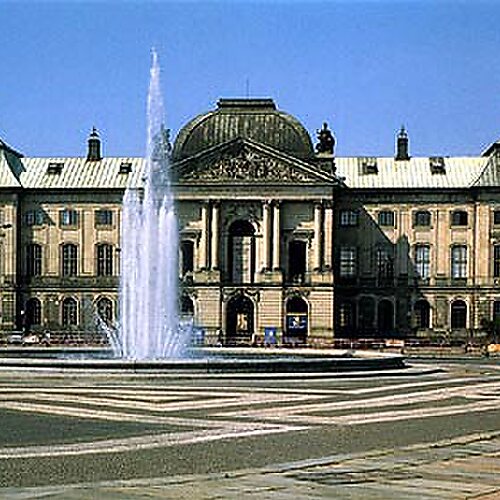
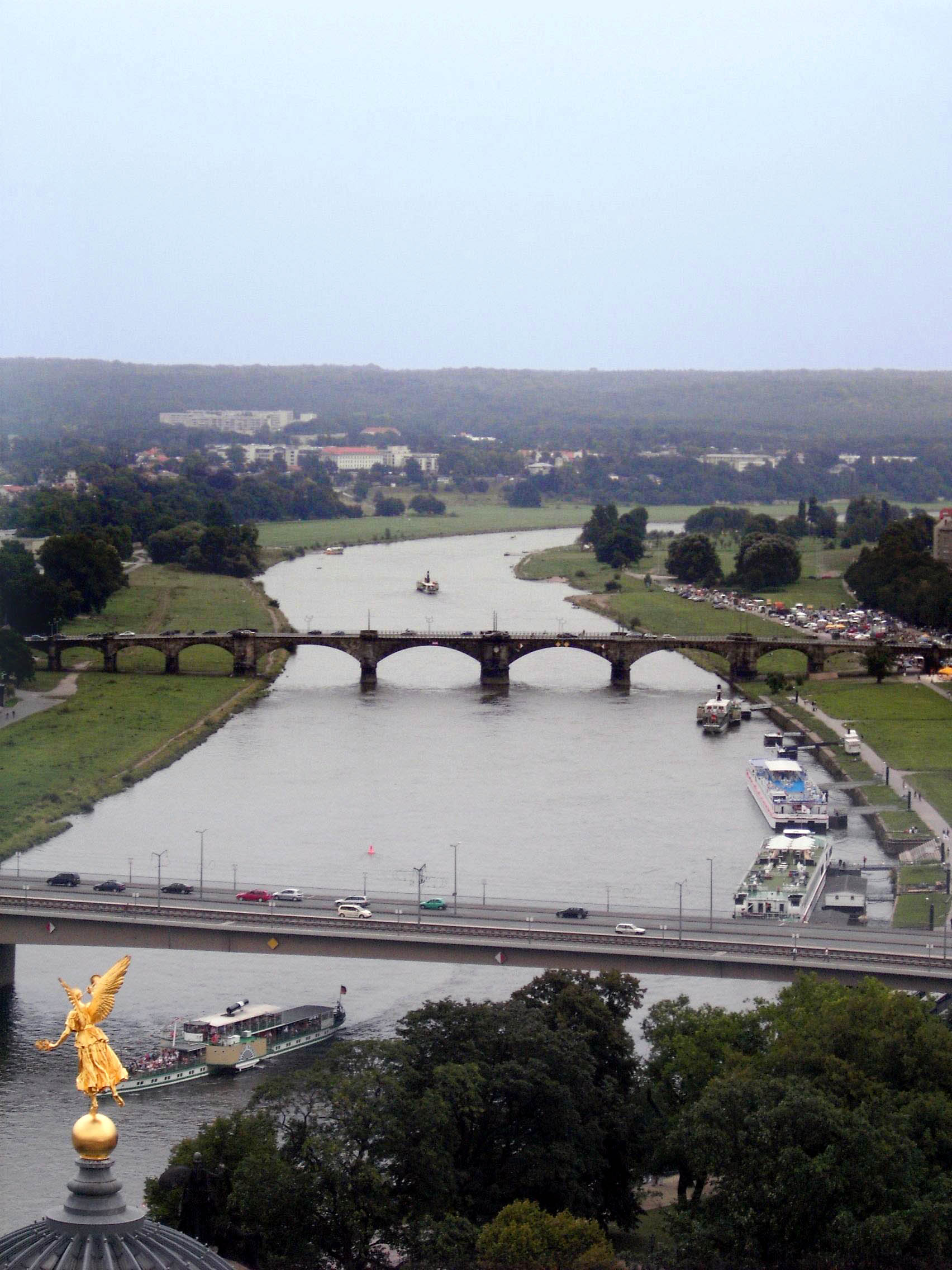
Here is Dresden's Frauenkirche thank you creative commons
Here I'd like to say that the godparent who expects to be instantly rewarded and/or gratified has sometimes to wait a long time. They may be rewarded in ways that are unexpected or unusual.
Jacqueline du Pre's godfather and cello benefactor, for instance. We learn along her road to the cello - which is presented as if it were a lightning bolt.
In A Genius in the Family - and indeed in Easton's Jacqueline du Pre - where first I learnt her story [and finally got in 2003 from McLeod] in a women's magazine [September 1989] - we see the small steps to get to that point.
And the family were immersed and marinated in music.
Derek was into folk music. Iris Greep into rhythmic teaching.
And they had a first child who was a bright and kind little girl. She was born in 1942.
She would do anything to protect her little sister - this story is told from pages 29 to 32.
When first I read it in June 1999 - and again in January 2000 - it was a formidable and sentimental story. I don't know how well it was shown in the movie - though I did watch it first.
There is a very funny lesson I learnt in January 1997 about My fair lady - and about examination technique.
Do not write about the movie when the play is meant.
Be careful about form and function
And if you write about a movie; have courage and write about the movie!
Write about the criticisms too.
This of course applies to art and theatre.
It was another lesson I had learnt on a road trip to an ocean and a beach.
So I want to talk about the significance of a port city and the people you interact with and deal with on a regular or irregular basis.
So many English cities have port in them; and so much of the Internet has portals in it.
Very often in Toastmasters and in Youth Leadership - you are chastised for using filler words and filler sounds - examples include like and so and you know and sort of. The sort of words which buy time and processing speed and accuracy.
Today is my first year as a NitroTypist. For ten months I have been an officer for the Original Gangsters 24.
We were encouraged in active listening and Vocal Variety.
And these roundtable discussions - I will never now be able to imagine them without seeing Tadeusz Mazowiecki and his hard line or bright line on the past.
In rush hours as a student and a researcher.
One finds one's chair - I sit near to the lectern or sometimes near the judges' table. There are not very many of us - unlike last year and the year before.
It would be a Thursday and some Thursdays were in the library.
I did bunk out of a speech some time in October - probably the last week or the second last week.
16 November 1995 - two weeks before the end of the programme and the United Nations Observation of the Day of Tolerance - I give a Table Topic about daylight saving and my speech about books which are important in my life.
And it is possible - though extremely unlikely - I mention The Silver Sword though my American friends may know this book as Escape from Warsaw.
I do remember now that the big topic is My favourite book.
And I do remember that I wrote about Little Women.
In December 1995 I make another foray [and, yes, this is a Pan Tadeusz joke!] into the world of speechmaking. It is a collaborative one this time.
My first effort at a speech was not so good. I think of Lady Renegade and how brave her poem was in 2008. How she was so subtly able to sink the boot in and talk about six years of betrayal so well.
I made the revisions suggested and put in some of my own. And I had only to cover half of it.
There is a reason I leave the "Best memory" blank. Because it is an open question.
In December 1995, I try, also, to write a children's book version of a memoir.
The first attempt was very actualite; the second attempt was more sociological and cultural.
And, yes, it was capitalising on a market and an interest.
That whole writing and speaking for a general audience - an intelligent adult audience.
I could not trust their intelligence. I could not trust their adulthood. And I especially could not trust their auditing.
To enter into that contract of mistrust would be a significant setback.
So from 1996 to 2006 I was very careful about what speaking engagements I accepted and was into.
Where they were more like performance opportunities I accepted. In October/November 1998 - some 21 years ago now - I took on Courtney Chadwick's I wish I were an eagle and The Survivor from a book of international poems - Poems for a peaceful planet.
And I somehow had a reputation of getting out of all the oral presentations.
Today I want to talk about the intelligence of babies; toddlers; children; adolescents.
You will never get that intelligent adult audience you seek if you disrespect anyone at any stage of their development.
That disrespect may be unintentional - however I have found that it usually requires some intent and some agency.
It requires responsibility and shows a lack of sensitivity and empathy.
We can and do work through these lacks.
We do learn and teach through great deficits - often aching and gaping deficits.
We do forgive and pay debts - often enormous debts.
And we do this because we hope to win more than we lose; we give more than we take.
In fact there was a clever dick's words about Winners and Losers.
They did mark me a lot - the more so because the mark was delayed.
Sometimes I check myself because I was way out of line ...
And I noticed that Serallier died as I was being born as a writer [28 November 1994].
That first fiction book - Mixed-up Mademoiselle - came up in great part because of a wedding in the country. I wanted to write eight books and I finally wrote my dream book - Monsieur Carver's Yellow Girl - in November 2007 - well, at least 37,000 words on it.
Still waiting on that Chelsea Flower Show - and there was a good article about gardening in Provence.
These very well-arranged and organised and structured gardens.
Some three years before I professionalised there was an exercise about a girl called Kelly and falling into a garden such as you might do from a bungalow.
Seraillier lived and worked in West Sussex - Chichester in particular - his cottage was a flint cottage.
And if you are at the University of Reading you can look at his work.
Third literary godfather: Miroslav Sasek.
His great contribution to my literary development was This is London. It is part of a series called This is which is about different cities.
He mentioned things like the Chelsea Pensioners and the pubs and the mews and the pea-green fog and smog. [like The Owl and the Pussycat and their pea-green boat - oh Edward Lear!]
As well as buildings like the various museums and galleries.
He showed me a city in which it was possible to be in.
And you think that if this Czechoslovakian urbane knows the Anglosphere ...
Another of my favourite literary people is Miroslav - he lives in Only the heart by Au Chiem and Caswell - and he is the significant other of Linh who is a resilient young woman. Miroslav has his ways too.
Sasek made the most immediate impact - his book I did not really see as a story book. It had something of the "right" balance between text and illustration/image.
And there was a life beyond and before the Livingstones - someone had written in their address.
It was an urbane person; someone who lived in the city.
And then I realise that This is London is 60 years old.
It was a bit under 30 when it came to me.
Lots of the books have been republished in the last 10 years. For a new generation.
Around 2002-09 I discover Miroslav Sasek has a website.
This year I bought the Archer novel Nothing ventured which is all about a Harry Clifton character in the world of detective work and art forgeries - obviously a world which Archer knows very well in his other work and avocational interests.
Another of this avocational interests is cricket - and often in the October/November season there is a lot to write about in that you become exposed to the best writing.
Equestrian events do much the same whether they are commercial and competitive or recreational and skill-building.
While writing Educating Tadeusz I went into the dark room and found a book about riding. The things that people say up on high about us - I did pick up useful material for a short story from the perspective of a vision-impaired woman in France and in England.
That text hit some of the emotional beats and was very mannered.
Sasek took some really big road trips and helped the readers do so too.
In the olden days people used Thomas Cook and also Baedecker textbooks.
The pre-eminent travel writing of my generation and the one before has been Lonely Planet. I thank Tony and Margaret Wheeler every day - especially when I used Thorn Tree in early August 2000. That is the forum for travellers. I had my questions prepared about Central Europe - mostly the countries of the Visegrad Group - Slovakia; Hungary; Czech Republic and Poland - and I liked reading about the stans.
I had to use some trickery to get a phrase book - and then I did it twice. Different trickery - it helped that I had bought the first one openly in late August/early September 1995.
You know teachers and their gifts? I hope you are preparing for the Great Giving Season.
I will say only that it was an investment for the future.
Now the point about the road trip:
It brings out a lot of honesty and vulnerability [just remembered that Morton had his book called The year of vulnerability - he wrote a piece in the Saturday Paper about children becoming relinquished] in everyone - young and old alike.
There are some of us who would contend:
You are only as good as your worst day
and some writers are content - or positively revel - in putting their characters into "bad day" or "worst day" situations - and doing it quite frequently.
I have a deep ambivalence about being and becoming that sort of author.
Again - there are no short cuts for character development. Too many of one sort will unbalance a character. If you want to know more, especially about Mary Sue quizzes and how to make roleplays and collaborative writing opportunities like round-robins and chats, go to Springhole. I first discovered it in 2002 and then again in 2018 and I highly recommend it.
A travel book which inspired me was What Katy did next. I love the way Coolidge wrote about Paris and Rome and Naples. It was also a very real book especially Amy Norris and Rose Red and Neil Worthington.
And I had by now been able to count the Chalet Schoolbooks I had read on one hand.
[For the record: A Future Chalet School Girl; Joey goes to the Oberland; The school at the Chalet; Jo of the Chalet School and I swear up and down there was a later book].
There was also of course the Fabian Socialist Edith Nesbit or E. Nesbit.
I was to read in January 1996 Five children and it. Also Hodgson Burnett's A little princess; though not The sheep-pig which became a wonderful film called Babe. It is such a good film to see in the sunset.
It is even better to see on video - there were gifts too of Aladdin [which helped me through some athletics carnivals] and The Lion King [which was constantly being used for music talks - not by me - Celine Dion had now come into the mainstream and so by the last week of November 1995 - that was two speeches that week - one in class and one in public - I was to be the last.
And then there was a small lecture tradition and my speech was about "games you play" and there was another speech about a "far away country" - we students asked the speaking pupil questions. There were lots of open approaches and free-flowing work].
Louisa May Alcott's views of Germany in the 1860s and 1870s had come to me. Friederich Baehr is a legend.
So of course is Laurence / Laurie who is really Ladislas Wiesiewnewski. I had wondered if my student/autodidact Polish was able to stand it - and in July 1996 I finally hard my chance to look at a website about Louisa May Alcott.
Then one turns Ladislas into Wladyslaw [and remembers to put in the dark L's. In Polish they go above the letter - in English they seem to strike in the middle. Keep this in mind].
And Jean Little and His banner over me - and her two memoirs - one about when she was a small girl and one about her emerging as an author in Canada and also an activist and advocate.
I think of Gorrie and her sisters and brothers and the medical degree and the missionary life.
The memoir takes roughly fifteen years.
Someone else who wanted to live the missionary life is Peter Craig in The story girl and The golden road by L. M. Montgomery. I love the way he builds himself up and he makes this wonderful speech in the sermon contest. It makes me laugh; it makes me hoot; it makes me cry.
And the Emily series which I first encountered in 1993.
Emily of New Moon was new to me in the last quarter of 1995. And that book has been on many road trips.
The letters Emily writes to her Dad and her early life with him. The aunts Elizabeth and Laura and Cousin Jimmy.
We writers depend on account books and bills and anything which is scrap paper.
Public speakers have their tools too - like cue cards and speakers' notes.
The World Book Yearbooks help too. Especially the tables of continents and their leaders.
And Science Year Book - I believe I extolled their virtues to one Teaching Unicorn for her daughter and the rest of the family.
Here are The book of virtues and The history of the mind by Nicholas Humphrey who worked with Daniel Dennett - fine anthropologist and linguist and History and Philosophy man.
Also there are two volumes of Ken Maynard comic books which are based in public houses/hotels and racecourses and rural and regional settings. Dogs and rabbits are often the focalisers/facilitators of activities and adventures.
And they are very fine.
Thinking too of Helmut Kohl's cookbook. That was released in 1996 and I didn't learn of it until the early 2010s maybe?
Yesterday I was slightly mischievous [one speaks of a compliant response and occasionally even a mischievious response - this was my first explicit encounter with water familiarisation - or the first one for which there was a narrative report] in suggesting Europe was not a continent.
Today I am thinking of page 394 in the Readers Digest Association's How to write and speak better.
That reference is two columns at the end of a chapter about Your child's speech.
Don't worry; English language learners cop that particular bucket of crabs and sea lice too.
The distribution may be qualitatively and quantitatively different.
Remember what I said about "no royal road" and "no shortcuts"?
There are two ways, essentially, that parents will try to cheat fate and time.
The first one is what the RDA authors call coddling
and the second is marvelling.
The coddling model is the one where needs are anticipated so that there is never really a need for [formally defined] language.
The marvelling model is the one where a person tries to make a marvel out of a child.
Neither this nor any other strong divergence from normal language development...
There's a difference between having fun with the divergences and challenging and being challenged by and with them.
And only one in five speech divergences are caused by natural causes.
That means eighty percent are caused by the environment - humanity.
And that was the research in the mid-1970s.
We live in 2019 where the Human Genome Project has been.
Also there is Planet Word. Thank you Stephen Fry and his mates.
[there was a thing that Fry said 10 years ago that made me fry like a radish or a Babybel cheese - you know; white on the inside; red on the outside].
There are kids in that book who speak Klingon - delight my nerdy heart.
[Okay - that last bit was rhetorical!]
Anyway - that was so radical and radicool.
When I wrote Motivators of Stockton I was exploring man's inhumanity to man through the art of politics. Essentially exorcising the New Labour campaign. And there was this boy called Laszlo.
It seems to me that the Ms Frizzle wifi is on.
So I will leave you with an extract/excerpt and I wish you lots of watermelon radishes.
Another point about intrusive narrators.
C.S. Lewis taught me a lot of what I know about the practice - and it took George Eliot to un-teach me.
The first time I did it was in 1993 and I said "she does not come into the story much" about a woman called Mrs Balme. Mrs Balme was a kiap [someone who is a public servant in the dependent Papua and New Guinea], for whom the protagonist Miss Upchurch worked inside and outside the house.
Here is an excerpt about Holly McCutcheon; Caroline Peters [and I am so sorry I confused Caroline and Carolyn from Hoagie's Gifted- that latter lady runs the place!]; Miss Susanne Winter and Miss Eveline Pertilly. And Angelique Rodina Chatelaine, whose old aunt Marie-Therese makes a killing of an inheritance.
And we also meet Geraldine Caroline Eunice Harrison-Meadows. For a month the Guernsey Collegiate has had no head girl.
In chapter seven we meet Verity Rossiter and her mother Claudine Rossiter.
Then there is Mrs Forrestor-Davies - in the excerpt which begins here Mrs Hare [the woman Chatelaine and Pertilly have appointed Head] is doing her principal thing with Holly. And it seems to be a good introduction to who Eveline is and was.
A good thing about Mrs Hare is that she allows her daughters to read anything.
She could easily be Le Lievre - which is French for Hare.
Miss Chatelaine didn't and doesn't.
The eldest Peters girl I was never sure whether to write Shelly or Shirley.
Kate was always going to be Kate.
And the triplets were always Elinor; Catherine and Anne - named after various Queens - they appear in chapter eight.
Anne finds her special companion - Jannifer Jilliton. She and her baby daughter will become important later on.
Miss Winter is introduced as a servant girl - probably in the sense of servant leader or servant heart. Her connection is through Mr Peters; the father of three daughters - the youngest of whom, Caroline, is Holly's friend.
Les Femmes Savantes is based on Moliere. And Moliere was a very famous playwright in the Classical style - the unity of time; place; situation.
"We'll see what Miss Chatelaine and Mam'zelle say. Miss Chatelaine is reasonably tolerant, but Mam'zelle had a horror of people like you from way back. She was always bustling and never shy or withdrawn. She said what she wanted to say, as soon as she learnt to say it.", said Mrs Hare, who had found out this much about Mam'zelle from confidential talks.
Mam'zelle knew exactly what to do. She took Holly to a building she called Les Femmes Savantes which means the Special-Talent Girls in French. "I and Miss Chatelaine will keep you here and observe you, because we both of us think that you can never get with other girls. You have been alone too long.", said that wise lady.
She had wanted to call the building L'Institut pour l'Enfant Terribles but Miss Chatelaine called against it. "It is a silly name for a sensible place. It is supposed to make special talents acceptably special to the others!", she said. Mam'zelle didn't understand in the least. Miss Chatelaine replied, "You'll understand when Holly is the most popular girl in the school!"
They took her to the building. Inside there was a piano, a computer, some seeds, a typewriter, pencils, paper and two pretty flowered notebooks. There was a cut-off dormitory added to the main room where the girl slept. There was also a servant girl who tried to help the girl staying there as best as she could. She was very tolerant and knew special talents. She was a friend of Mr Peters, Caroline's father. "Good morning, Miss Holly. Mam'zelle tells me you are a bad girl-but such a good girl really!", said Miss Winter.
Miss Winter was two years younger than Mam'zelle. But she had had a higher education and was a genius. Mam'zelle envied her. She was a chatty girl and liked to speak and be spoken to. So she stood there and stamped her feet when Holly did not talk. "Mam'zelle tells me you are very shy. But she can't talk. You know what I mean, Holly dear. She just worked with her tutor and I was her best friend. I liked her-she was such a jolly girl when she learnt the language properly. But she talked with her eyes. You don't talk with anything and you are English! Mam'zelle would be ashamed of you!", she said. Holly replied, "I'll talk to you sometimes. I promise, promise, promise, Miss Winter."
"Golly, thought you didn't like me. But seems you do!", said Miss Winter. Holly kept quiet. "Well, you don't have to talk if you want to. There are people with brains who don't talk. Everyone knows that, even Mam'zelle, and she just attended school for one term when she was sixteen.", she replied. Miss Winter took all sorts of notes about Holly. But she knew the secret of discretion.
"If you don't mind, Miss Winter, could I see Caroline Peters, please.", said Holly. "Oh yes, do! But come to me. I'd like to meet her. I don't know her, but I know the other two-Kate and Shelly. I like them.", said Miss Winter.
So Holly went to see Caroline. Caroline was just getting into her pyjamas. "Holly?", she said. "Caroline! I came to apologise to you for being so silly. Come to Les Femmes Savantes for one day. I'm sure Miss Winter will let you. She's your father's friend and Mam'zelle's too.", replied Holly. "I shall come. I know you didn't really mean it.", said Caroline.
The two girls came to Les Femmes Savantes, friends once more. Holly always behaved herself, but always visited the old building with Caroline. Nobody lived in that building with Miss Winter, but she was not lonely. She came to visit the girls of both houses, but Holly and Caroline were her very special friends.
"I hear a new girl is coming.", said Miss Chatelaine to Mrs Hare. Both discussed things they never told Mam'zelle, though that young lady found them out at once. "Eveline, you shouldn't listen at doors.", said Miss Chatelaine once. But Mam'zelle did it, and Mrs Hare said she was a dreadful example for the girls.
The girls of Maison Polonaise were particularly interested. For this sixth-former would be living in Tante-Marie Therese Maison. Therefore this girl would be a rival. "Golly!", they all thought. Previously, they only had the Peters girls and they all liked them. This strange girl was hardly part of the "Foundation band" as they called themselves.
Just then, the girl came in. "Good morning, Eveline. Good morning, Angelique. Good morning Mr and Mrs Hare and Mr Peters.", she said. Miss Chatelaine was shocked. No-one except the teachers had ever called her Angelique! Never, ever, ever. "And good morning to you, Miss Geraldine Carole Eunice Harrison-Meadows.", said Mam'zelle. People called her Eveline all the time, so she was not shocked at all.
Geraldine found the room in the main building of the school devoted to the sixth form. There was no teacher as yet. But she would jolly well follow the curriculum on her own. She was sad that there were no girls her age, but she must try to get along with the ones the school did have. Pamela, Clarisse, Kate, Shelly and Holly were all a very nice lot she thought-better than the girls with whom she had attended school before.
The school had passed its first month. A very successful month it had been, and Geraldine would make it even more successful-that is, if she behaved herself. "A nice new school-a nice new way, that's what Eveline told me. She's a very nice woman for a teacher. So are Angelique and all the others!", she said.
Miss Winter tutored her in everything and found that she had an intelligent girl on her hands. She was kind and sociable too. In fact, she was almost the perfect schoolgirl-the well-conducted ambassador that every school needs until it finds its feet.
Then a teacher was found through Mrs Werry. Many of her friends had been teachers. This one had just come out of uni and was ten years older than Mam'zelle. "That woman has just spent her life in university.", said Mrs Werry to Mam'zelle. She knew for a fact that Mam'zelle had completed her Teacher's Degree in only two years and got honours in Psychology of Learning. (Mam'zelle had wanted to be a psychologist before she discovered teaching.) She had to smile when she found out that the new teacher had an Arts degree with honours in Slavic languages and literatures. When she had been finishing that, she took her teacher's course. She had been clever and well read. And now she was coming to the Collegiate! Mam'zelle smiled. She was going to recite her speech. It began, "It is a honour to have a teacher like Mrs Forrestor-Davies in our school." She was nervous. Then she saw a limousine. She just could not believe it! That grand lady coming in a limousine-and she just come out of uni! "Mrs Werry, could you explain the limousine?", she said. "Well, Mrs Forrestor-Davies is very rich and she's just teaching for the fun of it. When she heard she was to come here, she could not stop smiling. I think it's something to do with you and Miss Chatelaine. And oh, you'd better be careful with your English, Eveline.", replied Mrs Werry. "I'll be careful," promised Mam'zelle. She hadn't been told to be careful with her English in years! Mam'zelle was preparing her speech. All the students were waiting for Mrs Forrestor-Davies to make her appearance. And shock horror! she was just an ordinary lady. But Mam'zelle and the other teachers recovered their shock. "It is a very nice morning to be at the Collegiate, isn't it?" "Nice is not the only adjective in the English language, young lady! You could have used good, excellent, radical, awesome or any adjective like that!", said Mrs Forrestor-Davies. "I told you that you had to be careful with your English!", muttered Mrs Werry to Mam'zelle. Mam'zelle corrected herself. She wasn't going to be caught out by this lady! She didn't make her speech after all, as she was afraid it was ungrammatical and breaking all the rules of the English language. And she didn't want to do that. Mrs Forrestor-Davies noticed the Frenchwoman's silence. She said, "Read my famous book-A Thesis on the English Language and the Learning of It. It is good for girls like you, Miss Pertilly." Mam'zelle tried to regain her serenity. She had not been called Miss Pertilly as long as she could remember. "This lady is awful impertinent.", said Mam'zelle. Mrs Forrestor-Davies said, "So I'm impertinent, am I? My only problem is that I know exactly what the matter is. You sacrifice your Germanic for your Slavic. A lot of girls do it, though they never think about their English. Luckily my English was...is excellent before I started diving into Tolstoy in the original Russian." Mam'zelle thought that was a true rebuke and solemnly promised on her Dickens that she'd take more care of the English language in future. Miss Winter gave her the book she wanted. She studied it instead of teaching French that day. The girls were not at all pleased, especially Geraldine. She thought she was going to see Mam'zelle in action. She went to Maison Polonaise that night, disillusioned. She started crying all over her phrase book. (Shall I tell you what language she was learning?) Then she took ouot Thesis on the English Language. She took a quiz. Her English was a little better than the average speakers-all of them uni students of Cambridge and Oxford! At least that was what her results said. "Please," said Miss Chatelaine to Mam'zelle, "Mrs Forrestor-Davies did not really mean to pick on your English. She said to me that it was actually very good. It was even a par on the Queen's she said." "Tell her that I'm a Republican and I don't care about her English!", snapped Mam'zelle. Miss Chatelaine gave the message and the girls all slept very, very soundly. Mam'zelle fell asleep very quickly. Miss Chatelaine less so. Geraldine was in Maison Polonaise, sleeping in a strange bed-but she did not mind it one little tiny bit. Pamela, Clarisse, Holly and the Peters girls thought that the new sixth-form girl was very nice. But they wouldn't let her teacher know it...
"Eveline dear, You remember your old friend, Claudine Rossiter, at that public school? Well, she's an old married lady and has a daughter-Verity Rossiter. When she heard you were opening the Collegiate, she said, 'Miss Eveline always wanted to be a teacher. Now she's got what she wanted, she'll have my daughter." Well, she's coming! Golly, Miss Verity is about sixteen and she'll be in your fifth form. I understand you're not very well developed yet, but your girls get good marks! That is a good record and no mistake!
Miss Chatelaine tells me that you are very well and you got a teacher that picks on your English. I did not know it was so bad. You and me and my little brother Vladimir cause such suspicion and disappointment among the English teachers, but you became beyond how-do-you-say-its...
Well, it is time to close off. Claudine checks my letters every day.
Greta Paredeuski"
"Greta Paredeuski! Claudine Rossiter! I had no idea they were still around!", said Mam'zelle. She had known them both from her term in public school. Miss Chatelaine was surprised too, but she had begun the correspondence, thinking that Mam'zelle would find it quite beneath her. (She didn't.)
Geraldine had been two days at the school before Mrs Hare realised a housing mistake in regard to the said Geraldine. "Excuse me, Eveline, but did you put her in Maison Polonaise when she should be in Tante Marie-Therese Maison?", said Mrs Hare. Mam'zelle moved her and was pleased to find that Geraldine wasn't disoriented. She thought, "Thank heavens for that!"
Verity would be coming not long after from Munich in Germany. She was French though. You see, Verity and her mother had been taking a holiday to Germany for the last two years. Verity had been ill. She was getting better, though, so soon she would be coming to the Collegiate.
"Now, behave yourselves, girls! Somebody new is coming to the school!", said Mrs Hare. "Hey, you're not allowing new girls to settle down at this rate!", replied Mam'zelle. The teachers laughed. Mam'zelle thought, "Well, if it is the pace of the Collegiate and its first term! Golly, I usually like fast paces for heaven's sake."
She was thinking very hard of something when the bell rang. It told the girls that it was time for their lessons. "I think I shall just stay here.", said Pamela to Clarisse.
And so they saw the new girl and her mother. Mam'zelle was preoccupied with something or other and so did not see or hear. "Hey, Mrs Rossiter! How was Germany?", said Pamela with such an audacity that would have shocked Mam'zelle if she had heard it. "Just how do you know I've come back from Germany? Eveline, did you tell them?", said Mrs Rossiter. To the girls, "Pamela, Clarisse, this is Verity, my daughter." Mam'zelle woke up now and said, "How do you know their names?"
Mrs Rossiter retorted, "And how did they know I was in Germany? You didn't tell them, did you?" Mam'zelle said, "No, I did not." simply. Mrs Rossiter, "Now, Eveline, the time has come to talk of many things. As you know, I have trained as a teacher. An English teacher." "Ah yes, I remember now! You worked very hard with the Paredeuskis and now you intend to ask the Head if you can teach? Well, here is a place for you! The fifth form!", said Mam'zelle.
Mrs Rossiter went to Mrs Hare and they found they liked each other. As for Pamela and Clarisse, they thought Verity was, in the parlance of schoolgirls, "easy to get along with". Verity said, "You think it poss that I could be your friend?" Mam'zelle said, "You are just like your mother-she taught us to speak the language with gusto!" Verity replied, "When mother talked of you when I was a little girl, she used to wonder if your English had improved! Shall I tell her it has?"
After Verity and Mrs Rossiter had exchanged, Mam'zelle said, "I thank you kindly to lay of on my English!" Miss Winter came into the room. She said, "I new you when I was at your school and you at the Collegiate! I just can't believe that we're all meeting together this way." Mrs Rossiter was pleased to see her genius again. She had only been fourteen at the time and had already taken pre-Cavendish courses. Mrs Rossiter said, "So you are as clever as ever. I hear you take charge of Les Femmes Savantes which is a school in a school. Am I right, Eveline?" "Yes, that is right, Mrs Rossiter.", said Mam'zelle.
Then school started again with many disruptions. Verity was in form-room with her mother and the others had their fun. Mam'zelle studied her Dickens and her Thesis. Then she got a present that was delivered through Miss Chatelaine. It was a book called Language and Learning. But even perceptive Mam'zelle was not prepared to read what was inside. It was from Mrs Rossiter.
"To the French girl whose English has improved so much. You shall love reading about the Russian twins that remind you of Ivan the Terrible. How we used to giggle over his behaviour in school days! For E.P. from G.P. and C.R.", was what it said. "Thank you very much.", was all that Mam'zelle could say. And for once, just once, it was deemed acceptable by the hard task-master who made Eveline Pertilly what she was.
Verity didn't have any time to feel homesick for she was swept into the school's social life very quickly. As for her mother, she quite liked the other teachers except for Mrs Forrestor-Davies. And only she knew why, though Mam'zelle suspected a little bit...
Here is the part which concerns a road trip:
CHAPTER NINE London
Mam'zelle was now in Greater London. She asked a friend, "Do you know Mrs Williams? I want to see her about something." The man said, "Miss Pertilly! I am Mr Williams himself. I shall show you my wife."
Mrs Williams was sitting in a rocking chair, crying. "Oh, my girls, my girls! Poor Anne, poor Catherine! Elinor is all right, thank heavens.", she sobbed. As she got the letter she said, "That Eveline Pertilly! I'll jolly well tell her that I've been to Len-er, St Petersburg myself! She is the sillliest girl I've ever met!" "Here is Miss Pertilly, and she says she comes to apologise.", said the servant girl.
Mam'zelle said, "Well, I'd like to apologise for the Leningrad Affair. Mr Williams said you had been there yourself and hang me for writing such nonsense!" Mrs Williams replied, "All right, Miss Pertilly, I admit it.The girls are half-Russian because my first husband was in St Petersburg. I, er, divorced him when the girls were born and Mr Williams came into my life. And we've all been happy ever since."
We all probably have had a Leningrad Affair, but very few of us get forgiven for it. Mam'zelle was one of the lucky ones and she found a long-lasting friend who was interested in internationalities after all.
Mrs Williams came often to the school, giving "regards to dear Miss Pertilly". And she became a teacher of the petite-form which her girls were in. So Mam'zelle returned to the Channel Islands, wiser and wordlier, but Western Continental still.
CHAPTER TEN Return to Guernsey
It was almost the end of term. Christmas was just around the corner. "Only a week to the end of the term.", said Mam'zelle to Miss Chatelaine. "Haven't we been a successful school so far?", said Miss Chatelaine.
"But the important thing is that we keep successful and not lose our good reputation.", said Mam'zelle. "You certainly lost it that time you went to London to apologise. Mrs Williams thought you looked like a fright-and so did I.", said Miss Chatelaine in a tone that told Mam'zelle she didn't want any more excursions like that.
An excursion-of a different sort-hapened to the girls that day. They planned to explore the beach. Mam'zelle was much cheered by that. They explored a nice, ordinary beach and Mam'zelle and Mr Hare went canoeing. She was taught very well, but she always did learn quickly!
Then they wanted to go to Shelly Beach, but they got mixed up and Mam'zelle showed them a beach called Christopher Columbus Beach. That was her own name for it. The girls had fun playing on the rocks, hiding in rocky places, collecting shells and running on the sand. Mam'zelle, a child still, enjoyed it as much as anyone. "Well, she's only twenty, but a great responsibility. She'll sober up as time goes on." thought Miss Chatelaine. Well, you've got a hard job, Angelique!
Like another Angelique, she kept sedate. "My hard task is nearly done. Now I have a harder task ahead of me.", said she. The girls didn't mind at all! The teachers just laughed it off.
Mrs Williams never got any peace that week. She was constantly teased about Mam'zelle and what she had done. She said, "That French girl has loving-kindness and will go far, if she curbs her reciting tongue." Mam'zelle and the others just laughed.
And the end of the book when the young ladies leave after their Christmas meal [this is not a thing they get to have again]:
The last week, the girls were very, very busy. They packed personal possessions and wished each other Merry Christmas, little knowing what surprises would wait for them at the end.
Miss Chatelaine cooked up a Christmas feast. And the girls ate almost every bit of it. "Golly, how some of the girls have improved in just a very short time.", said Mam'zelle as she saw Holly shake hands and Catherine set the table for the teachers' feast.
Pamela set up the glasses for the toast. "Here's to the Guernsey Collegiate-the best school in the Channel Islands!", said she. They said goodbye to all their teachers and Mam'zelle who was still feeling badly over the end of the term. "You'll see us again in January. I wonder what surprises the new term will bring!", said all the girls.
Well, we don't know. But one thing is for certain-the girls are going to have a good holiday and memories of the first term in the Collegiate.
As the last girl left, Mam'zelle was doing some hard work, making the beds, polishing the floors (a thing she never did), scrubbing the chairs and making the boarding houses ready for the next wonderful term at the Collegiate.
Goodbye girls, I hope you enjoy the holidays. But I know you'll enjoy next term even more. And so do Mam'zelle and Miss Chatelaine. Their idea was a success-this book has seen to that! Au revoir for a little while.
That thing about Miss Winter liking to "speak and to be spoken to".
She appears quite a bit in Sarah at the Collegiate - the Sarah being a Japanese student - and not nearly so much in Rivals - she has her own reasons as you will see.
Eveline has met a man at the beach in the New Year. By the time of Rivals she has known him for about three or four months [the excerpt does mention 'early May' - a fairly big week with Liberation Day in the Channel Islands; Europe Day and V-E day]. She has also her own ambitions which sweep up the whole Collegiate in Guernsey and out - the Laurie in the extract is Laurie Sutterby-Butler who accompanies the School and so does a woman called Gretchen La Terre:
CHAPTER THREE Pounds, Poles and Papers
These three things kept figuring in Mam'zelle's life. The pounds she was trying to earn for the school's Continental trip, the Poles whose language she could not study now (she had grown tired of studying privately) and the papers that contained notes, compositions, tests and love-letters which she never grew tired of reading. They happened very quickly. First the girls were thinking up enterprising ways to raise money. And people donated very generously. Mam'zelle thanked them very much. "But the school will grow before we get the money!", she said. And she was right. Ten new girls came to the Collegiate-more than Mam'zelle could even try to remember. Five went into Polonaise and the other five went into Tante Marie-Therese. Mrs Hare put the names down. She told Mam'zelle, "Kathleen Petrie, Charlene Sutterby, Yolanda Rogers, Chantelle Harrison, Tessa James, Fran Van Der Winterburg, Cameronette Unterwalder, Jane Sutterby (Charlene's sister), Alice Griffin and Marie-Therese Rougley." Mam'zelle said, "What names some of them have!" Mrs Hare replied, "Do you notice that they came to the concert? I thought you'd remember some of the names!" Now to the Poles: Mam'zelle was pleasantly surprised when the Dean welcomed her back to the University. Another teacher had been found in Pan Wolski's place. And it was much calmer than before for the students concerned. (Pan Wolski had taught Intermediate Polish). The Dean smiled. She said, "Mam'zelle, there is no fault in Pani Groszy. She has that sunny temper which you'll like." So they learnt a lot more. She was studying the other languages as well. At the end of the term, she would have exams. It pleased the girls and tickled them that Mam'zelle had to take exams also. Hugh picked her up as usual. "Do you read my love letters?", he asked. "Constantly. Even more than I do my phrase books." replied Mam'zelle. "How's the new teacher, Evvy?", asked Hugh. "She is all right, I guess. She behaves herself, anyhow. But that is because the Dean told us to treat her like a Westerner-and that I shall do with vim!", said Mam'zelle. "What other parlances do you need for your degree?", asked Hugh. "Romanian, Magyar, Russian and Bulgarian." replied Mam'zelle, "I am an ambitious girl , am I not?" "Yes, you are, Evvy, and that's why I like you.", said Hugh. Hugh walked with Mam'zelle holding some of her books. Mam'zelle held his hand with a smile on her face. It was such a sunny May day. "May is my most favourite month of the year, especially the early part of it.", said Mam'zelle. "In that, as in so many things, I agree with you.", said Hugh. "Please, Hugh-I forgot to tell you, but we are travelling to the Continent next term! I am just so excited and it's a dream come true for me!" said Mam'zelle changing the subject entirely. "Well, what part of Europe are you and the girls travelling?", asked Hugh. "Germany and Poland mainly.", answered Mam'zelle. "Two contrasting lands. I remember when Laurie made her trip to the continent-she said they are so different!", said Hugh. Mam'zelle interrupted, "She is not alone in that." Finally, they went to the Collegiate where the girls were excited. 'This is Hugh, girls!", said Mam'zelle. "So this is Hugh Lewis whom we've heard so much about?", asked Felicity. "These are my Second Eleven, Hugh. They all came to the Collegiate this term.", giggled Mam'zelle. "Can you remember twenty-two names at once?", asked Hugh. "I have always been good with names.", smiled Mam'zelle. Mam'zelle introduced them, one by one, to Hugh. They all liked his ability to make a joke. They splitted their sides laughing. "Tell them how I met you.", whispered Hugh to Mam'zelle. Mam'zelle said, "Last term I went to the beach because Miss Chatelaine told me not to think of the Continent. And this boy saved me because I was thinking of Mrs Williams (I had just got into a Leningrad Affair then) and he said he was Joseph Stalin. I was not at all amused. He kept ringing up and saying he was Continental leaders . Well, after Lech Walesa, I just got fed up and told me his real name. He's been taking me out ever since." "And you're lovers just like that?" asked Fran. Mam'zelle gave her a stare that she would never forget. "Sorry.", said Fran. Her friends looked at her, as if they could not believe she had said such a thing. Hugh and Mam'zelle went to have a private talk in La Maison Grande and the girls went to their houses to play indoor games. "Well, Mam'zelle, do you want us to get engaged before or after you go to the Continent?" asked Hugh. Mam'zelle said, "Look, I don't really see that the man has to do the asking." Hugh said, "Think hard and you'll ignore that aspect of it." "I most certainly will." replied Mam'zelle. She had a good time in Maison Polonaise in her bed, trying to think about it. She certainly wanted to get engaged, for she had heard about rushing into marriage and thought it wasn't decent. But she just couldn't ignore the fact that Hugh had asked her so openly. She was shocked. And she could not sleep. The Frenchwoman tossed and turned thinking. Meanwhile, the girls in Tante Marie-Therese were having another pillow fight. Geraldine hadn't checked on them yet. Mam'zelle told Charlene to check on the Marie-Therese girls please! "Very well, I will.", she said. She felt safe, but she had not decided. "This is my whole life I'm sacrificing here.", she thought. No, she had better get to sleep. The girls were fast asleep, waiting for another day. "Good night.", she said to herself. Then she fell asleep. The next day was sunny. The flowers were growing, the birds were singing and Mam'zelle was smiling. "I am still deciding," she thought, "But the Collegiate comes first." The girls saw Mam'zelle and asked her what the matter was. She would not tell, especially to a blabber mouth like Felicity. Felicity had already blabbed about Mam'zelle's ambitions. She never asked, just found out. "If this goes on, I shall be the laughing stock of the school." thought Mam'zelle. Out loud she said, "Felicity Maynard, who are you passing notes to?" Felicity answered, "Fran Van Der Winterburg, Mam'zelle." Mam'zelle said, "Both of you in the corner-separate corners, of course. We shall get on with our lesson." SHe was interrupted by the two whispering. "They've obviously decided to be friends. But this is the wrong time." thought Mam'zelle. She chided both of them. Mam'zelle thought, "I hope Felicity isn't setting that German girl a bad example which she doesn't need." She once again chided them after they were having a great gossip session. "I go to blab all this to Mrs Hare. Perhaps she can help me to deal with it.", said Mam'zelle. The girls got on with their lesson. Mrs Hare was just in the corridor. "What's the matter, Eveline! It must be serious to get you in such a state! Are you all right?", asked Mrs Hare, who was always concerned about Mam'zelle. Mam'zelle explained, "Fran and Felicity are whispering in the corner. And I fear that Fran is impressionable as I was so long ago, Mrs Hare. I wish you would go into that classroom and tell them off. So Mrs Hare did. And Mam'zelle thought up some of her queer penaces. "Penaces are always, always needed for bad English girls.", said Mam'zelle. They had worked so well for her-one term, he poor hand was pinched twenty times. "Now I know better, but four years ago, the Paredeuskis and I did not always get on lovely." said Mam'zelle. She told Felicity and Fran to hold onto their tongues whenever they heard private information. "It's slippery!", complained Fran. "Then mind your so-tripping tongue.", replied Mam'zelle. "I had to do that when I was sixteen and pinch my hand too. You can see one of the bruises still-the first one." The other girls told about Mam'zelle's queer penaces. Mam'zelle had to smile at the effect. Felicity was much quieter and so was Fran. "Now I can have peace in French class and all the others. "Thank utter heaven!", said Clarisse.
CHAPTER FOUR Rivals
The Continental Competition, as Pamela called it, was heating up. Which house would earn the most money for their trip? At first, it seemed that the Polonaise girls would earn the most. But the Tante Marie-Therese girls soon caught up. It was to become a dirty rivalry. mam'zelle would not have this. "The trip is supposed to benefit you all." she would say and then say no more. "This trip is meant to be a competition." said Cameronette, the oldest in Marie-Therese Maison. Geraldine said, "You can't even keep your house in order!" So Charlene Sutterby was moved to Marie-Therse. And then, with her assistance, the girls started a car-wash. Many cars came to it and they raised #10. "A princely sum of money.", they thought. But the Maison Poloanise girls did one better. They had a dog wash. They held their noses but they got a lot of customers and raised #40.70. They really lorded it over their rivals, who were determined to get revenge over the Polonaise girls. And then Fran had a good idea! In Germany, she had been playing her fiddle in the streets to music lovers. "But I do not know if I can do this thing here.", she said sadly. The girls talked it over and Mrs Hare said they could have a busking band. "That means you stand in the streets and people drop money into a hat.", she said. The girls thrilled to this idea at once. They rehearsed and rehearsed, but the Maison Polanise girls had got Mrs Hare's permission, went to a department store and raised another #3. "How dare they, Mrs Hare!" said Clarisse. "Mother, how dare you give permission to these girls!" weeped Pamela. But they were slightly consoled when they went out the next day. They raised #14 and people promised more money which would be sent to the school. The Polonaise girls were not pleased. Mam'zelle said, "This is not one school but two houses." Felicity and Fran's friendship was soured because they lived in different houses. In fact, it was open war. None of the Polonaise girls would speak to the Marie-Therese girls. "This is terrible!", said the teachers. Caroline (Bless her heart) tried to patch things up, but when she didn't try to raise money, the other girls were not pleased! "I guess I just won't go to the Continent at all.", said Caroline. "Who would you stay with?", said Shelly. Caroline replied, "Miss Winter." For Miss Winter would not go to the Continent. She said anyone must be foolish to be taking the kind of trip Mam'zelle and the girls were talking. She said, "Once Eveline reaches the Polish border, all hell would break loose!" Mam'zelle assured her friend that it would not be so. The teachers were not pleased, especially not Mrs Rossiter and Mrs Forrestor-Davies. The latter had quite a lot to say, "Eveline Pertilly, this is not a stimulating rivalry that the school needs, it's a war that could break up the school! Imagine if this got into the papers? Nobody would want to go to the Collegiate at all! And how do you like that, Eveline?", she said. "I don't at all. That's why I'll stop it.", replied Mam'zelle. So the girls stopped raising money, but they got up to a grand total of #400. "That is #750, including Monsieur L'Alpuget's bequest." said Mam'zelle. "We can esaily go to the Continent on that." And all that happened in just a week! "How time will fly when you have fun." said Mam'zelle to the girls. "Yes!" cheered all of them together. "That's more like it", thought Mam'zelle.
Yes, road trips do have the potential to bring disparate people and ideals and things together.
One of the senior girls has her Abitur to do.
And neither Eveline nor Fran der Winterberg have packed.
Sixteen days to go until Brexit.
Again, I wish you watermelon radish rainbows wares and wars.
If you are wondering what a watermelon radish rainbow is:
And this picture is from the US Department of Agriculture:
CHAPTER TEN
Arrangements and Arguments
Mam'zelle had no time to gather her wits and apologise. If she had, she would have been forgiven. The conductor was seething angrily. "Come here, Fraulein!", he said, "Hold out your hand!"
Mam'zelle and Laurie did so. For Laurie had been in it too. And she had giggled at the shocking English. "Fraulein, stop looking at me as if I was the reincarnation of Adolf Hitler! I must assure you that I am not! And your train will come soon.", he said. "S-s-sorry," stammered Mam'zelle, "I know you're not him. And besides Adolf Hitler was just someone I learnt in History!"
"Golly! I accept your excuse.", said the conductor. Just then, a boy was running to the conductor. He was making signs to the boy. "And here he is for your Mrs Gilbert. I have explained about poor little Vladimir until these girls' ears have dropped off.", said the conductor. Everyone laughed. He could really make a joke and really keep everyone listening.
Then warningly to Mam'zelle. "But you must still apologise to my friend." Mam'zelle replied, "Herr, your friends are our enemies." The conductor said, "But, Fraulein, that was years ago. Next time, I see her, I expect a full apology. And that is what I can give on a telegraph service. Do you understand me, Fraulein?"
Mam'zelle said that she understood. "Now I must see to my train. I must not keep these people waiting. For they are as desperate as yourselves.", he said. Mam'zelle giggled. "Really! You should not giggle about so serious a thing!", said her friend, shaking his finger at her. He helped her in the train and Laurie too. Mrs Hare was holding Vladimir in her arms. "I thank you very much, Mrs Hare.", said Mam'zelle. "A pleasure to do anything for you, Mam'zelle, a pleasure.", she said.
"Careful!", said the conductor. "Exactly!", replied Mam'zelle. "Where in heaven's name is that apology?", said Mrs Hare and Laurie together. Mam'zelle gave something very quickly in Polish, German and finally English. "All these languages! Well, she will think you very, very tolerant.", said the conductor.
"Well, I really do try to be tolerant, in life and writing. It is unfortunate that I do not always succeed.", said Mam'zelle in reply. She said this on the train. And they were all sitting down, having lovely chats.
"Did you really enjoy your trip?", a German asked Mam'zelle. "Er, er, not particularly. There were some, er, bad bits, but, er, er, I enjoyed it so well. I am not doing er, er, it again, er, er, for at least another two years. I've had enough of er, er, er, the er, er, er, er, Continent to last me a er, er, long, long, LONG time. Thank er, er, er, you very, very much.", replied Mam'zelle. If Miss Chatelaine had been alive, she would have rebuked Mam'zelle for so many ers. But she was dead and the other teachers took her place. "Do learn to speak English as clearly as possible, or you will never set the example you want to set.", said Mrs Hare.
"All right then! It was just a fit of nerves.", said Mam'zelle. "Not Polenitis, I hope.", recited the girls. Paemla added, "And what do you mean by saying that Europe was awful?" Mam'zelle said, "Oh, you'll understand that when you're older. But there are some people in some countries that never understand anything."
Holly didn't want to attack her beloved Mam'zelle and neither did Anne. But they were both highly strung and their morals were just as high. Also, they were worried about what certain teachers might think.
"Really, Mam'zelle! If Mrs Gilbert heard you say that, she'd never speak to you again. And we really care what Mrs Werry and Mrs Gilbert think, if you don't.", they said. Mam'zelle apologised all over again. She honestly didn't know what was happening to her. Though she did not realise it, she was fighting a cold that she had caught over the border.
But she was well enough to get off the train and change stations at Dresden's Central Station from Frankfurt's. A six-year-old girl ran fast to her, but stopped at the tracks. "Sensible girl.", thought Mam'zelle. Out loud, she said, "Ingrid Fischer! You still remember me! I was the one that saved you that time." Ingrid said, "This is thank you-from all of us."
She was referring to a large present that was in her father's car. "Merci.", said Mam'zelle, forgetting her command of German and English for the moment. An older girl, about sixteen, was wearing the Collegiate uniform.
"My father said I could go to your school next term. Please, but he is very forgetful and when he heard of you, he forgot you. I thank you for saving my little sister. I love her next best to mein Vater and meine Mutter-and you.", said Alicia Fischer. "Well, we'd better take her also, for she is a real Collegiate girl now.", said Mam'zelle.
"Mam'zelle, one more fugitive and...", began Laurie. Mam'zelle interrupted, "She is not a fugitive. And I don't want you referring to my beneficiaries that way. Besides, what are you going to do to me, Laurie Sutterby-Butler?" She saw Catherine leaning over the window and panicked.
"Catherine Shepansky Williams! Come with me and sit down properly. It's all right-Alicia won't bite you.", said Mam'zelle. "If this school is as frantic and you as shallow as some of the girls say, then I won't have a lovely time. I want to, though.", said Alicia herself. Mam'zelle looked upset about being called shallow, but she was not, really. She just seemed that way because she lived for the moment.
And all this while little Vladimir was fast asleep, dreaming!
CHAPTER ELEVEN
Return to Guernsey and the Collegiate-and Mrs Gilbert
Mam'zelle looked at Catherine, Anne and Elinor and told Alicia to keep an eye on them. "Shucks! All right, then!", said Alicia. "Such shocking English!", said Mam'zelle to Alicia. "All right, I won't use any more of it, Eveline.", said Alicia herself.
"Mam'zelle to you!", rebuked Mrs Hare. All this was going on when the little Vladimir stirred and ran around the train. "That child is absolutely restless.", thought Mam'zelle, "Shocking that he doesn't know any more about decent behaviour than that."
So she put a most virtuous look on her face and caught Vladimir just in time. "Behave yourself! Do you understand me!", she said. He didn't understand at all, but Mam'zelle, by that time, had him quite safe in her arms. "Dieu merci! Thank heavens!", she said to the girls.
She put him in the care of Mrs Hare, who took the responsibility most gracefully. Then she could jolly well keep an eye on the stations and the girls, who seemed to get a whole new second wind about coming home. After all, the Continent was lovely, but home and their family just seemed to speak to them.
"Mam'zelle, are you sure you're all right?", said Pamela, who was very considerate when it came to poor Mam'zelle. "Yes, thank you, thanks to your level-headed mother. And tolerant you, of course.", said Mam'zelle with the old giggle. But that face had seen much better days. So had her tired eyes.
The next week-which just happened to be the last week of the term-they were in Guernsey. That week, Mam'zelle quite surprised the Gilberts-and so did Vladimir. "Hello, Mam'zelle, Susan's friend.", said Mr Gilbert. They were seeing each other for the very first tiem, for they had married in the holidays before this term.
"Susan, Robert-a little present from Poland!", she said, presenting a quite unsettled Vladimir. Mrs Gilbert gave her a look and Mr Gilbert said, "Have you broken any immigration laws lately?"
Mam'zelle shook her head, and went to see various parents who were picking up their girls for the end of the term. Tomorrow would be the very last day. Girls were handing in their Continetal assignments. Teachers were saying goodbye and wishing Mam'zelle and the Gilberts all the very best.
Then-the reunion of all reunions! "Hugh! Hugh! I cannot believe that it is you!", asid Mam'zelle. "Evvy! How are you? Did you get ill, crossing the Polish border? Did you have the most terrific time you ever had? Do you miss me? Do you still love me? Am I the flower of your heart?", replied Hugh. "Just give me a good minute to rest while I put the cases and trunks away in Maison de la Chatelaine for another term. Then I shall answer every question as far as in me lies, Hugh. And of course I shall always love you my- Hugh!", said Mam'zelle who really had been tired out. She did her tasks and thought many thoughts. "This Continental trip has been most excellent for me after all. I have learnt many lessons. And I have had such a time getting to know each and every girl. But best of all, the even better times are for me to enjoy-here on Guernsey for a long, long time to come.", said Mam'zelle, as she polished girls' shoes.
As the last girl went home and said goodbye, Mam'zelle said to Mrs Hare, "Golly, this has been an excellent first year for the Collegiate. Twenty-two girls, profits, companionship and all the things I love so well." Mrs Hare said, "There are at least eighteen more girls to come."
Mam'zelle was wondering about the girls. She wondered how they spent their holidays, so she gave them an assignment. They had to write letters telling how they had enjoyed the first year of the Collegiate and what they planned to do on the holidays. She got them on the last day. She really loved reading them, because she loved to know everything there was to know about the Collegiate and its girls.
!["When nearly every glass thing in a Cambridge house is broken ... what else can you do but to give your neighbour a plastic bowl of chutney" #thechutneyofeton [Image of herbs and two bowls of chutney and a green-yellow-orange-red human] [text resumes] "And sensible people do not usually fob off dogs or parrots with chocolate biscuits" [hashtags] #thatbarofrespect #modifythebehavioursettlethescore [text resumes; new paragraph] Dogs and parrots usually have the intelligence of at least a 3-year-old; and for dogs chocolate is specifically contraindicated. [paragraph ends] [new paragraph] Some will remind that what I mean by [emphasis] intelligence [emphasis ends] : social and emotional regulation and inter/transcultural adaptation. [hashtags] #chutneywithheart #chutneyforbrains [hashtags end] Not a great time to have a birthday or a big celebration (especially if you're a kid)!](https://blogger.googleusercontent.com/img/b/R29vZ2xl/AVvXsEgwvD4nWUEw6mJ_sIgJBXb0ZBSbviBeS2XcTDOoM4yF1CX4jTtGwIOyhbaP3_rq_BumV-5hMtDLGm4cMiAeEDAO4SZ1GOPAqQCJLVOAtwqTTuw1v1qqnholWBeWGK3rjllQ55yNSA/s1600/A+bowl+of+chutney+%2523thatbarofrespect+%2523chutneywithheart+%2523chutneyforbrains.png "That plastic bowl of chutney - 15 April 2020")